Skip to content

World Congress of Historical Sciences

The CISH regularly organises the World Congress of Historical Sciences (WCHS).
This global gathering of the international community of historians offers them an opportunity to present the most innovative themes and to engage with colleagues from every continent.

The next World Congress will be held in 2029 or 2030. In 2026, the CISH is organising a Centennial Conference in Leipzig.

History of the World Congresses

Genesis

In 1898, under the impetus of the French scholar René de Maulde-La Clavière, the Société d’histoire diplomatique organised a Congress of Diplomatic History in The Hague.

This event laid the groundwork for structured international scholarly exchange. The very first International Congress of Historical Sciences was held in Paris in 1900 under the title “Congress of Comparative History.” It took place alongside the World Exhibition and reflected both a desire to establish history as a rigorous scientific discipline and the broader climate of national rivalry in which historical scholarship was deeply embedded.

Subsequent congresses in Rome (1903), Berlin (1908), and London (1913) steadily expanded in scope and participation, before the First World War brought this momentum to a halt. When international cooperation resumed, the 1923 Brussels Congress proved a turning point: driven by Henri Pirenne and inspired by Wilsonian ideals of peaceful international collaboration, the foundations were laid for a permanent institution dedicated to the organisation of International Congresses.

The CISH was thus formally established in Geneva in 1926, with the aim of providing historians with a stable institutional framework through which to meet regularly, present their work, and compare their methodologies.

Former Congresses

The Organising Committee of the 23rd Congress in Poznań and the Board created a summary of all CISH Congresses.

1st Congress – 23-28 July 1900

The World Exhibition

In 1900, the world lived the great Universal World Exhibition in Paris. As many as 242 scientific congresses were held on this occasion. The exhibitions organised before World War I were a great opportunity for such events. They had the idea of showing the progress of civilization, which was a result of the development and interaction of science, society and technology. The rich exhibition pavilions referred to historical styles, contrasting with technical innovations. This was the atmosphere of the first “true” Congress of historians, then still under the name of the International Congress of Comparative History.

New Nationalisms and Globalization

The chairman of the Congress Bureau was Gaston Boissier, a secretary of the French Academy, who dealt with the history of ancient Rome. The chairman of the Executive Committee, in turn, was a specialist in history of diplomacy René de Maulde-La Clavière, who two years earlier was the main organiser of the International Congress of the History of Diplomacy in La Haye. This conference is considered a kind of “prologue” to the world congresses of historians. Anyway, the idea of international exchange of ideas was born just within the Society of History of Diplomacy. On the one hand, the progressing development of states and the emergence of “new nationalisms”, on the other, the existence of the phenomenon of “globalization” (mondialisation, internationalisation) was observed. Maulde-La Clavière saw world congresses as events on the border between science and politics. The art of diplomacy was considered as a tool enabling the nations to communicate with each other and therefore its historical approach was to be dominant.

Sections

The Congress of Paris was held in Collège de France from 23 to 28 of July. It was divided into 8 sections. The first was general history and the history of diplomacy. In the section 21 papers were delivered; it gathered around 300 participants. In the second section – comparative history of institutions and law – 14 papers were presented. In the third, on the history of comparative social economy, 5 papers were delivered, in the fourth, devoted to matters of religion, also 5, history of science up to 20, comparative history of literature 16, history of art and drawing 15. The eighth section – the history of music – was held as a separate International Congress (38 speeches). At the Congress almost a half of the speakers were French. In addition, the results of their research presented several representatives from Italy, Germany, Russia, Sweden, Austria-Hungary, Belgium, Switzerland, Spain, two representatives from Greece, Romania and the Vatican, and one from the United Kingdom, Luxembourg, the Netherlands, Portugal and the USA.

New Methods

Henri Houssaye, a chairman of the organising committee of the first section, said that the classical method of the historical research had been renewed. Greater emphasis has been placed on critiques of sources, and public and private archives were increasingly willing to share their collections. History was no longer written by great leaders, so the contemporary historian should have paid due attention to facts and truth, and these were in the documents. It is characteristic that not only historians but also representatives of the governments of some countries chaired this section. The papers were mainly devoted to political history, although there were also topics that probably did not match other sections.
During the meeting of second section, its chairman, Adhémar Esmain, noted that the comparative method was new also in the field of law. In this section, there were commentaries about the history of law in individual countries, but also about the issue of natural law or law in French colonies. In the third section, the leading theme were guilds , in the fourth, among others topics Roman Catholics, Greek Catholics and Protestants were compared, and in the fifth covered issues from technical sciences, through biology, geography, to medicine were raised. The sixth section, in turn, focused on the literature of European countries and its interactions, while in the seventh the papers concerned mainly Italian, French, German and Greek art. The Congress of the History of Music was divided into groups that corresponded to the epochs – Antiquity, the Middle Ages and Modern Times.

The Congress in Paris gave a chance to speak about their own history to historians from smaller countries, sometimes treated marginally. This was assessed by later historians as a symbol and sign of the coming out of these countries from under shadow of great powers. The outcome of the Congress was the seven-volume publication of the papers publishing house (not all papers were included). Moreover, the new journal “Revue de synthèse historique” appeared, which was founded by Henri Berr, who invited to international and interdisciplinary cooperation.

Autor

Magdalena Heruday-Kiełczewska

Bibliography
  • Congrès international d’histoire comparée. Annales internationales d’histoire. Congrès de Paris 1900, vol. 1-7, Paris 1901
  • A. Dubois, Der erste internationale Historikerkongress in Paris 1900, 2014
  • G. Hübinger, B. Picht, E. Dabrowska, “Cultures historiques et politique scientifique. Les congrès internationaux des historiens avant la Première Guerre mondiale”, Revue germanique internationale 12 (2010) 175–191.
  • Le Figaro 24 VII 1900, p. 2
  • Rapport général sur les congrès de l’exposition par M. de Chasseloup-Laubat. Exposition universelle internationale de 1900 à Paris, Paris 1906
  • A. Rasmussen, “Les Congrès internationaux liés aux Expositions universelles de Paris (1867-1900)”, Cahiers Georges Sorel 7 (1989) 23–44

2nd Congress – 1-9 April 1903

A failed first attempt

The 2nd International Congress of Historical Sciences was initially planned to have taken place on 16-25 April 1902. Its preparations were entrusted to the President of the Organising Committee Enrico Teodorico Luigi Giovanni Maria Count San Martino and Valperga, President of St. Cecilia Music Academy in Rome and the city councellor for education.
The person directly responsible, however, was the archaeologist Ettore Pais, professor of the Federico II University in Naples and director of the Naples Archaeological Museum, a disciple and friend of Theodor Mommsen. Historian Giacomo Gorrini was the secretary of the Organising Committee, composed moreover e.g. of archaeologist and architect Giacomo Boni, archaeologist Luigi Ceci, who was the principal opponent of Pais, as well as historians Giovanni Monticolo, Niccolo Barozzi, Guglielmo Berchet, writer and deputy to Parliament Pompeo Gherardo Molmenti, and Count Filippo Nani Mocenigo. The Committee included moreover e.g. sculptor Adolfo Apolloni, lawyer Carlo Fiorilli, senator and diplomat Giuseppe Greppi, economist Francesco Saverio Nitti, and philosopher Benedetto Croce. The hostile approach of the Italian academic community to Pais, regarded as a traitor due to his support of the theories of German scholars concerning the origins of Rome, led to the dismissal of the Committee and the postponing of the organisation of the Congress for indefinite time.

New Organising Committee

The new Organising Committee, appointed by the minister of education Nunzio Nasi, was presided by historian, senator and former minister of education Pasquale Villari, appreciated in Italy and internationally as an expert on Girolamo Savonarola and Niccolo Machiavelli. Gorrini was reappointed the Committee’s secretary. The other members were literature scholar Domenico Pietro Antonio Camparetti, politician Paolo Boselli, and historians Oreste Tommasini and Count Ugo Balzani. Two representatives of the ministry of education supervising the work of the Committee were senator and linguist Graziadio Isaia Ascoli and writer and literary critic Alessandro D’Ancona. The Committee, convening for its first meeting on July 10 in the company of representatives of the major scholarly institutions of Italy, presented to King Victor Emanuel III the general draft (concept?) of the new Congress on December 21.

Sections

Ultimately, the Congress took place on 1-9 April 1903. Although the number of sections was far smaller than initially planned in 1902 (eight instead of twenty), the agenda was quite extensive. It included not only history and auxiliary sciences, but also a number of other scholarly disciplines loosely tied with the historical sciences. The first section was dedicated to ancient history, epigraphy and classical languages and literatures, the second to medieval and modern history, the third to literary history, the fourth to archaeology, numismatics and the history of art, music and theatre, the fifth to the history of law and socio-economic sciences, the sixth to the history of geography and historical geography, the seventh to the history and philosophy of religion, the eighth to the history of mathematics, physics and medicine. The venue was a former Jesuit building of the Roman College (Collegium Romanum). Only sections four, five and six were held, respectively, at St. Cecilia Academy, the building of the Legal Association (Circolo giuridico) and in the offices of the Italian Geographic Society (Societa geografica italiana).
Scholars could participate actively in two ways, either by delivering rapid communications reporting only the community of historians the most recent developments and discoveries, followed by no debate; and by delivering papers with research proposals and collective editorial projects. Italian was the official language of the Congress. It was spoken not only by the local scholars but also by most of the international speakers, with the exception of the French, who solely used their mother tongue. The section dedicated to classical languages and literatures was conducted in Latin.

Numerous Participants

By comparison with the previous Congress, the number of participants was truly extraordinary. Out of a total of 2,060 invited guests, it was attended by around 1,500-1,800 participants; 450 of the guests delivered papers. Most were Italians (1,144, who delivered 188 papers), but there was also a large number of Germans (358, with 18 papers), French (194, with 28 papers), citizens of the Austro-Hungarian Empire (97, with 6 papers), the English (74, with 5 papers), Russian subjects (47, with 5 papers), and Belgians (31, with 1 paper). Germany was represented e.g. by a classical philologist Ulrich von Wilamowitz-Moellendorff, who presided over the section dedicated to classical languages and literatures, theologian Adolf von Harnack, lawyer Otto Gierke, rector of Berlin University, and diplomacy scholar Paul Kehr. France was represented e.g. by a classical philologist and medievalist Paul Meyer, geographer Vidal de la Blache, and historian Gabriel Monod, editor of Revue Historique. The Austro-Hungarian Empire was represented e.g. by Ludo Moritz Hartmann, a scholar researching the medieval history of Italy, and Church historian Ludwig von Pastor, director of the Austrian Institute of History in Rome. Lawyer James Bryce came from London while historian and philologist Vasily Ivanovich Modestov from Petersburg.
The launch of the Congress was preceded by a meeting (April 1), during which the details of its inauguration were hammered out. Presidency of the Congress was entrusted to Pasquale Villari, with von Harnack, von Pastor, Meyer, Bryce, and Modestov as his deputies. The honorary presidents included, apart from Italian Minister of Education Nunzio Nasi, Mayor of Rome Prospero Colonna and Minister of Foreign Affairs Enrico Costantino Morin and Theodor Mommsen, who was absent. The Congress was launched on Capitol Hill, in the Conservators’ Palace, in the presence of King Victor Emanuel III and Queen Helen of Montenegro. The session was inaugurated by Mayor Colonna and Minister Nasi, who stressed the universal contribution of Rome and Italy to the human civilisation.
The two were followed by Congress President Villari, who delivered a plenary lecture. The Italian historian observed that while the 19th century was an age of the development of nationalities and emancipation of the working class, the mission of the 20th century would consist in raising the material and intellectual level of people of Africa and Asia. Furthermore, reviling nationalism, Villari stressed that due to their location between America and Russia the countries of Europe should strive to reach an agreement. As to historical disciplines, Villari observed that history is the only true foundation of the social sciences, which are a prerequisite for the understanding of the surrounding world. He moreover called for comparative studies, claiming that one cannot comprehend the history of any nation without a broader perspective, not collaborating with scholars from other countries.

New Disciplines

The Congress offered an opportunity to demonstrate the progress of the disciplines that had developed so vehemently in the latter half of the 19th century, such as archaeology, biographical studies, history of culture, and Bible studies. It was also a major stage in the process of departing from historical idealism for the sake of alternative concepts. This is borne out by the statements made by Ludo Hartmann and Benedetto Croce. First and foremost, however, the Congress was a debate forum for the discussion of all kinds of research proposals and projects. Many concerned philology, source texts edition and lexicons. For example, proposals were put forth to carry out work on a set of Latin proper nouns (Felice Ramarino) and on the bibliography of Greek and Latin classics (Remigio Sabbadini). Another proposal called for the establishment of an international team collecting Greek literary papyri (Girolamo Vitelli). Other projects focused on the middle ages, e.g. by discussing the utility of a set of Italian medieval epigraphs (Francesco Novati) and Italian diplomatic documents (Luigi Schiaparelli). In turn, Alessandro D’Ancona suggested the publication of a biographic and bibliographic dictionary of Italians. Some proposals related to paleo-ethnology (Luigi Pigorini) and historical geography (Giuseppe Dalla Vedova). Although not all of the above suggestions were acted upon, the Congress contributed to the debate on various research questions.
Some of the participants presented already published texts or ongoing research and editorial projects. A heated debate among the Italians was triggered by a reprint of a series of chronicles edited by Ludovico Antonio Muratori: Rerum italicarum scriptores. Coming out in the Scipio Lapi publishing house, they were re-edited by Giosue Carducci and Vittorio Fiorini. During the session presided over by the Belgian historian Paul Fredericq, an adoption of a resolution supporting the initiative was proposed in the presence of over 400 participants. However, due to the opposition of the Italian Historical Institute, who according to its bylaws dealt with editing source texts, among others, a call was ultimately accepted commissioning the publication of the text, without specifying the publisher. The debate, apart from Villari, was attended by influential historians from abroad, such as Robert Davidsohn from Gdańsk, an eminent expert on the history of Florence, and Gabriel Monod. The Congress was moreover an event during which scholars advised one another about the most recent archaeological discoveries. For example, Luigi Pigorini provided a meticulous description of the archaeological excavations carried out by a team of Italian archaeologists in Crete.

Accompanying Events

The Congress meetings were supplemented by a versatile program of accompanying events (exhibitions, concerts, parties). Of special significance was the unveiling on September 2 of a reconstructed map of ancient Rome, Forma Urbis Severiana, made in Rome by Rodolfo Lancini in collaboration with the German Archaeological Institute. An exhibition of the topography of Rome in the Victor Emanuel II Library was launched the very next day. The agenda of accompanying events included moreover a concert of sacred music composed by Italian masters, directed by Raffaelo Terziani, and a mandolin concert in the Coliseum.
The organisers offered a number of sightseeing tours, including to Norma, Sermoneta and the archaeological excavations in Norba. A trip to Sicily was originally planned for September 14-22. According to plan, a cruise ship was to drop anchor in a number of locations on the coastline and the participants were to visit e.g. Messina, Taormina, Catania, Siracuse, and Palermo. On the way back, they were to make stops at Amalfi, Sorrento and on Capri. For lack of a sufficient number of registered participants, however, the tour did not take place.

Critiques and Successes

A lot of attention was paid to the Congress by the Italian press, not only by the newspapers issued in Rome, but also those from other cities. This was due to the support offered to the Congress by the Ministry of Education and interest displayed by the royal couple. The overall assessment of the Congress was favourable, but there were also words of critique. There were reservations as to the extensively broad range of topics and the presence of disciplines indirectly linked with the historical sciences. Due to the predominance of issues related to linguistic and literary studies, the playwright Giuseppe Giacosa complained in Corriere della Sera that the session dedicated to the history of science was not treated seriously enough. Dissatisfaction was expressed about the form of proceedings, i.e. no debates after the statements, as well as the noninnovative character and the local scope of the issues addressed. The opinions expressed by international press varied; they were more critical in Germany and England and rather favourable in France.
The Congress gave rise to 12 volumes of documents, published in the years 1904-1907 by Accademia dei Lincei. Incidentally, the Congress led to individual publications, such as the text of a lecture by Giacomo Boni, delivered during a tour of the Forum Romanum.

Autor

Andrea Mariani

Bibliography
  • Atti del Congresso Internazionale di Scienze Storiche (Roma, 1-9 aprile 1903), vol. 1-12, Roma 1904-1907.
  • Corriere della Sera, 1903, nr 60, s. 2, nr 63, s. 1, nr 64, s. 1, nr 90, s. 1, nr 91, s. 2, nr 92, s. 2, nr 93, s. 1, nr 96, s. 2, nr 97, s. 2, nr 98, s. 2, nr 113, s. 1, nr 188, s. 1.
  • K.D. Erdmann, Die Ökumene der Historiker. Geschichte der Internationalen Historikerkongresse und des Comité International des Sciences Historiques, Göttingen 1987.

3rd Congress – 6-12 August 1908

The Moral Obligations of Historians

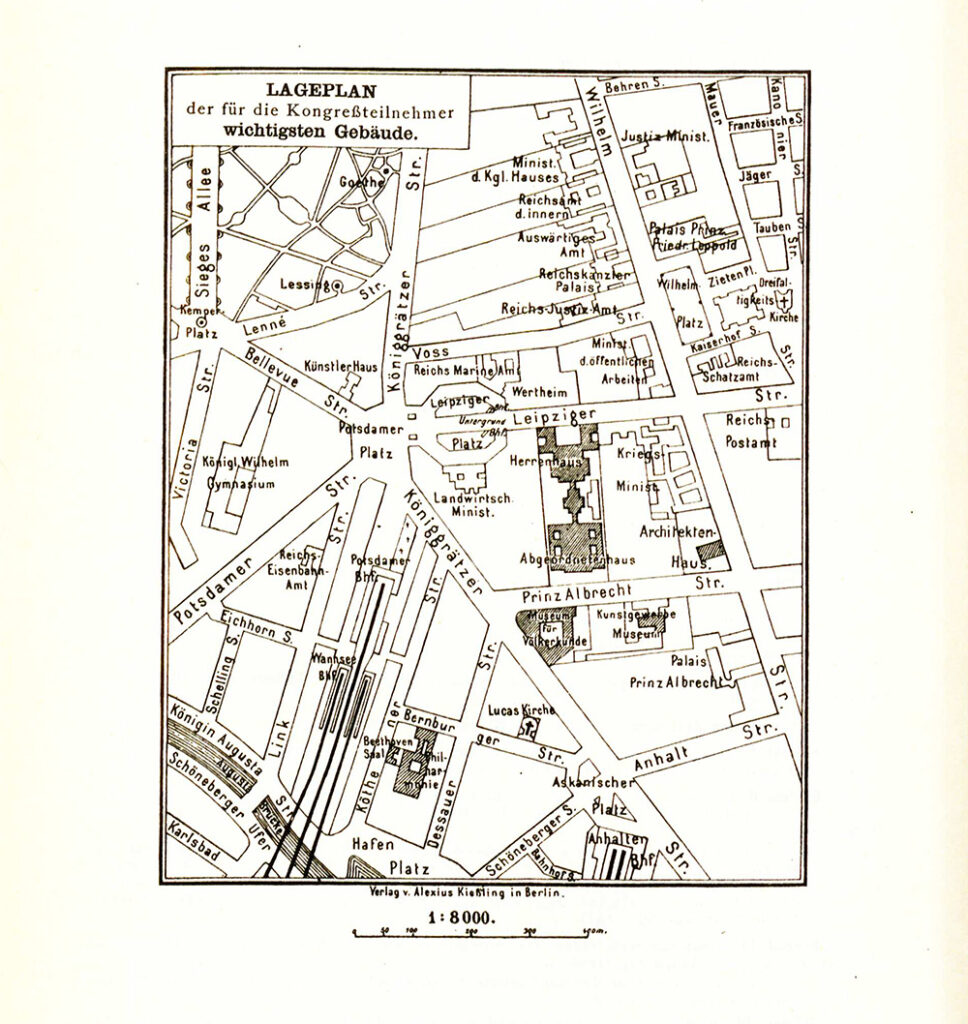
The 3rd International Congress of Historical Sciences took place in Germany’s capital Berlin on 6-12 August 1908. The organising committee was headed by the “triumvirate”: Director General of the Royal State Archive Reinhold Koser and professors of the Royal University of Frederick William in Berlin: Eduard Mayer and Ulrich von Wilamowitz-Moellendorff.

During the opening ceremony, Reinhold Koser read out a letter from the Chancellor of the Reich Bernhard von Bülow. Addresses were delivered moreover by: Secretary of State Theobald von Bethmann–Hollweg, Mayor of Berlin Georg Reicke, Secretary of the Royal Prussian Academy of Sciences Arthur von Auwers, and President of the Royal University of Frederick William in Berlin Carl Stumpf. The keynote speech at the opening ceremony was given by the U.S. Ambassador to Germany, David Jane Hill, who presented the issue of moral obligations faced by historians in the age of historiography written from a national perspective.

Sessions

The Congress agenda consisted of 56 sessions divided into general sessions (6) and thematic ones (50). The latter addressed 8 areas: history of the ancient East, history of ancient Greece and Rome, political history of the Middle Ages and modern times, history of ideas and culture of the Middle Ages and modern times, legal and economic history, history of the Church, history of art, history of auxiliary sciences of history. A sub-section on the history of natural sciences was also created. The session agenda was divided into lectures and debates. The congress languages were German, English, French, Italian, and Latin.

As part of the thematic sections, Antiquity scholars debated, among other things, ancient Egyptian sepulchral art. Medieval experts and modernists discussed, e.g. the categorization of historical sources and their impact on research. In the Church’s history section, a debate was triggered by the problem of the beginnings of Church organisation in Protestantism. Particular interest was also aroused by the lecture by Erich Marcks from the Department of History in Hamburg on the young years of Otto von Bismarck.

The general sessions focused on more cross-cutting issues, such as the periodization of art history or the history of Islam. The lecture of the Director of the Egyptian Museum in Cairo, Gaston Maspero, who presented the risks associated with the protection of ancient monuments and the measures necessary for their effective rescue, attracted a lot of interest.
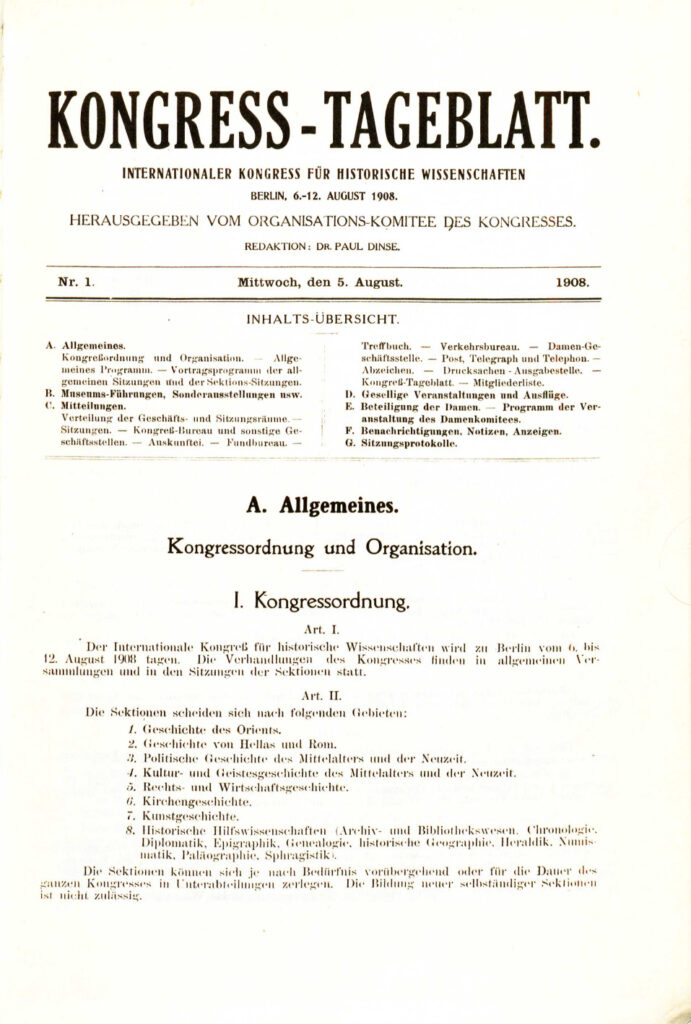
The Congress participants had at their disposal an extensive printed programme of the events prepared by the hosts. Moreover, an information bulletin was published daily during the Congress; it contained brief reports on the meetings held on a given day.

Visits

A programme of accompanying events prepared for the Congress participants included visits to Berlin museums, archives and libraries, as well as tours of other cultural institutions and recreational facilities in and around Berlin. With the female participants of the Congress in mind, the organisers set up a special committee (Damenkomitee), whose task was to help organise their stay in Berlin.

During the closing ceremony, the host of the next Congress, London, was announced. Moreover, by decision of the Congress participants, at the request of the Italian delegation, a memorial plaque on the family house of Theodor Mommsen was founded.

Bibliography
  • Programm des Internationalen Kongresses für historische Wissenschaften, Berlin, 6. bis 12 August 1908, Berlin 1908.
  • Kongress-Tageblatt. Internationaler Kongress für Historische Wissenschaften, 1908, Nos. 1-7.

4th Congress – 2-9 April 1913

The last Congress before the War

The International Congress of Historical Sciences took place in London on 2-9 April 1913. Its organisers were the British Academy and the Royal Historical Society, headed by Sir Charles Firth.

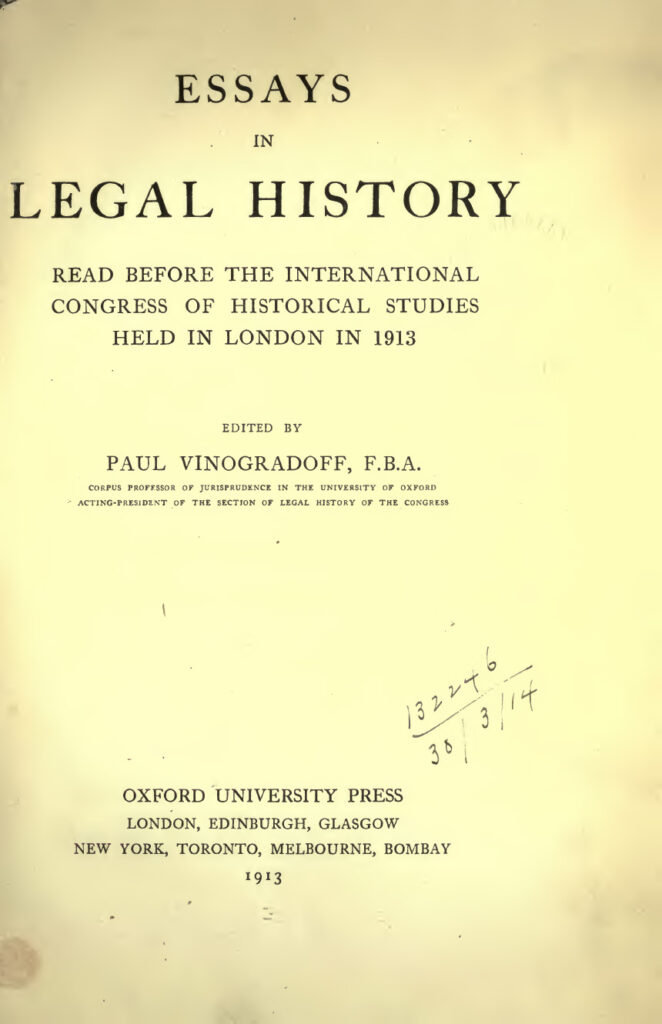
Among the participants of the Congress were eminent scholars: an American medievalist from Harvard University, Charles Homer Haskins, British historian Sir George Walter Prothero and the Russian medievalist Paul Vinogradoff from Oxford University, who chaired at the Congress the Section on the Legal History.

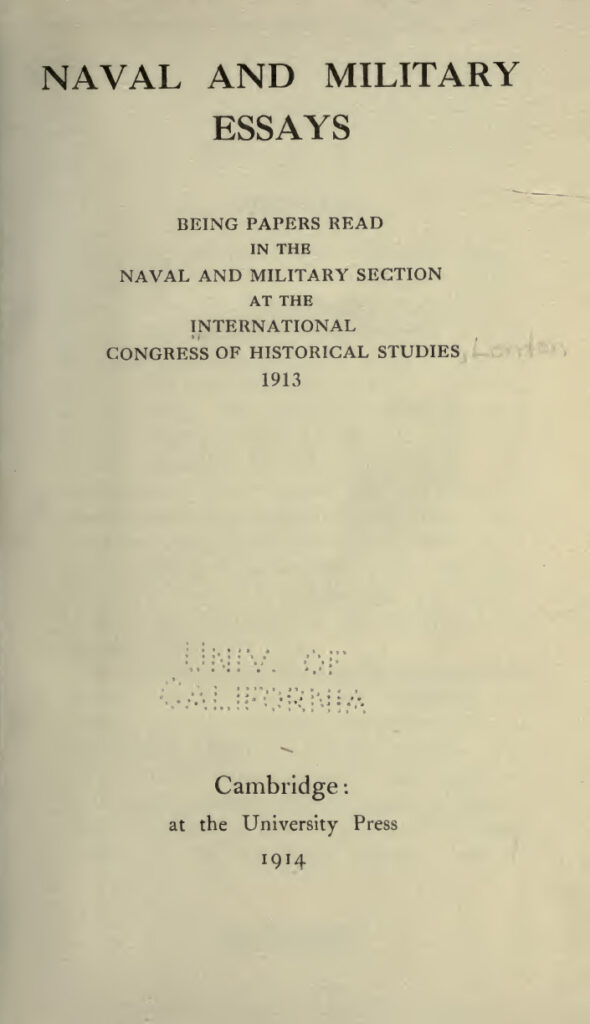
During the Congress in 1913, the Naval and Military Section was organised for the first time. The speakers focused on various aspects of research. Both historical issues (for example John Holland Rose delivered a paper Précis of the Plans of Napoleon for the Autumn Campaign of 1813 and Christopher Thomas Atkinson Foreign Regiments in the British Service 1793-1815); and issues of more methodological nature (e.g. Alfred Dewar presented a lecture entitled Naval History and the Necessity of a Catalog, and Sir Lonsdale Hale The Difficulties Encountered in Compiling Military History) were discussed. Papers presented in this section were published by Cambridge University Press, because the organisers of the Congress were not able to cover the costs of publication.

However, the Oxford University Press published the materials of the Section on Legal History. According to this publication the participants gave papers in German, Italian, English and French. The papers concerned specialist questions (e.g. Edwin Charles Clark gave a lecture entitled Numismatic Illustrations of the History of Roman Law), as well as more cross-sectional (e.g. Sir Frederick Pollock’s paper The Transformation of Equity). Other papers concerned issues related to the tradition of the Roman law and law in different countries (including Germany, France, Russia and England).

Bibliography
  • Essays in Legal History Read before the International Congress of Historical Studies Held in London in 1913, ed. Paul Vinogradoff, London-Edinburgh 1913.
  • Naval and Military Essays Being Papers Read in the Naval and Military Section at the International Congress of Historical Studies, Cambridge 1914.
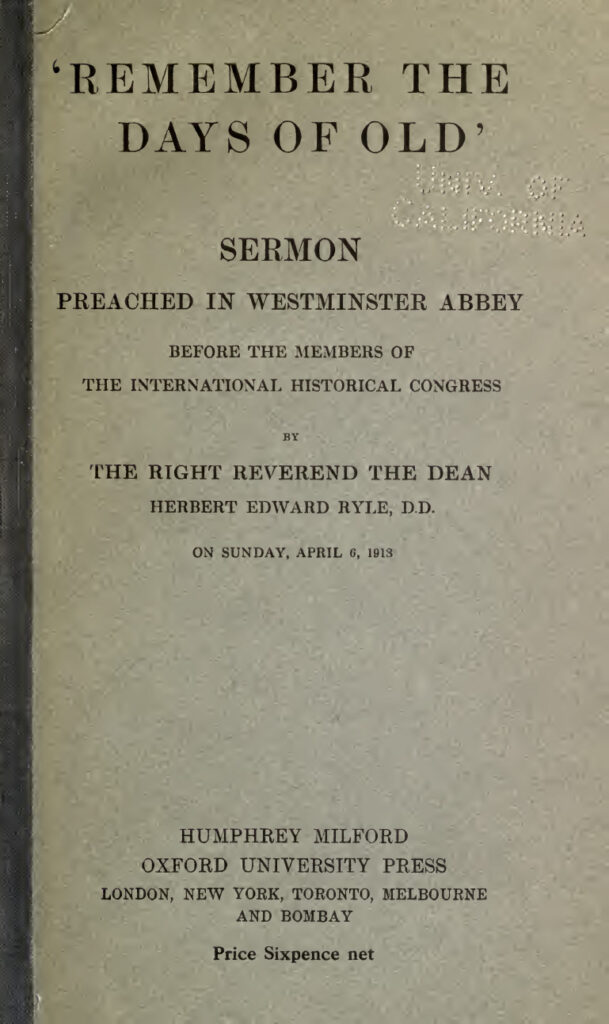
  • ‘Remember the Days of Old’. Sermon Preached in Westminster Abbey before the Members of the International Historical Congress, by the Right the Reverend the Dean Herbert Edward Ryle, D.D. on Sunday, April 6th, 1913, London-New York 1913

5th Congress – 8-15 April 1923

Obviously a congress to be held in Brussels could not be organised on the same basis of inclusion as those which have been held before the war…

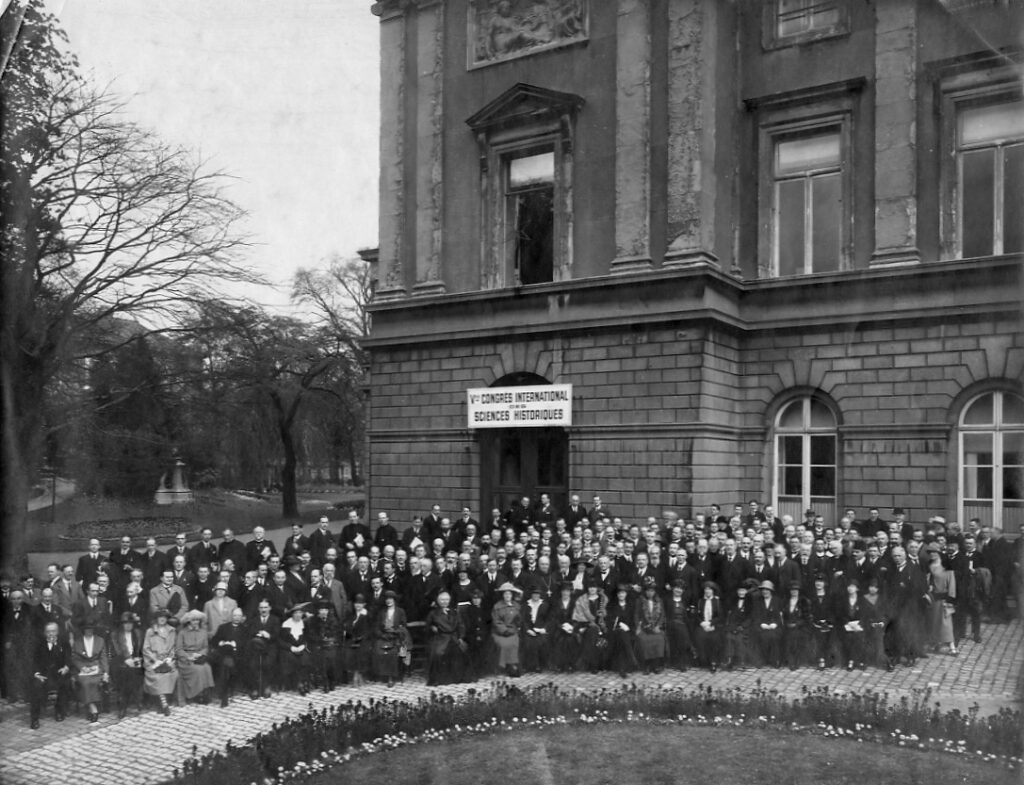
As stated the American historian, W.G. Leland, the first postwar International Congress of Historical Sciences could hardly be anything other than an aftermath Congress. It took place in Brussels in 1923 during the Easter holidays (8-15 April). The capital of Belgium had been suggested by the British Royal Society instead of Moscow in tribute to Belgium which had resisted to the German armies and had greatly suffered during the First World War.

No Central Powers – no Scandinavian Neutral Countries

No invitation had been sent to the Academies and universities of the Central Powers, therefore no Austrian and German historian participated in the Congress. As a consequence of the official boycott of Austrian and German historical scholarship, historians from neutral countries during the war – Denmark and Sweden – refused to participate in the first postwar Congress.

Sections

Nevertheless, the Congress was evaluated as successful. It consisted of 13 sections concerning different epochs and fields of history, including a section Documentation sur l’histoire du monde pendant la guerre. More than 350 papers were presented and around 700 scholars from 23 countries took part (315 from Belgium, 178 from France, 140 from the British Empire, 28 from the USA, 25 from Italy, 24 from the Netherlands, 22 from Poland, 17 from Spain, 10 from Switzerland; other countries had less than 10 representatives).

Networking

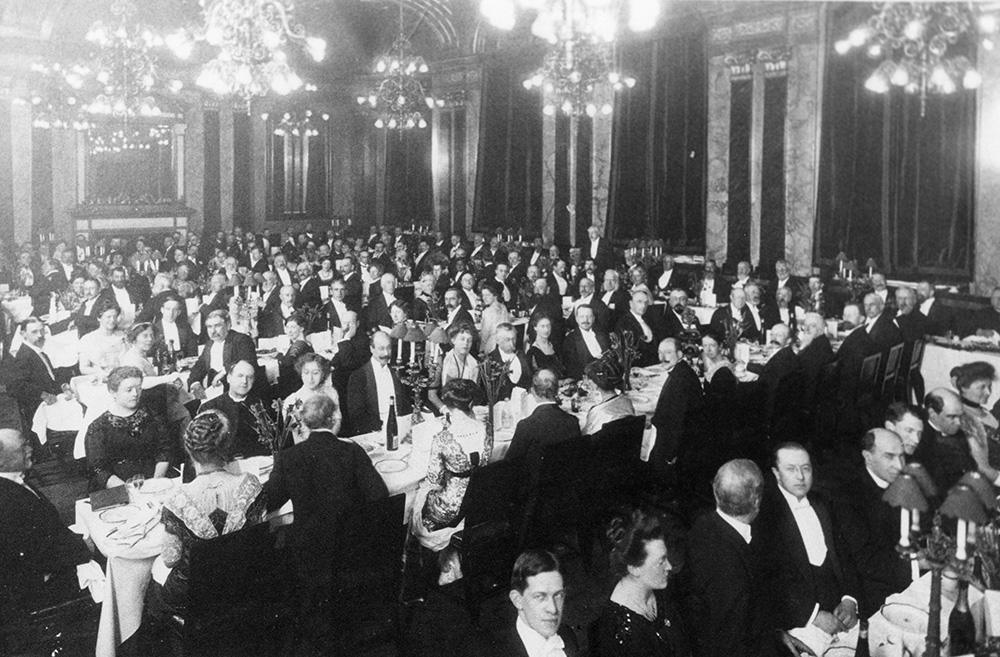
Besides the scientific activity, the Congress was an opportunity to socialize: the historians and their spouses were invited to receptions and dinners – the toilette de soirée (evening wear) was required, a salon de conversation (lounge) was set up at the Palais des Académies (the Congress venue), and excursions were organised – a special brochure with the detailed program had been printed.
The inaugural address of the Congress, delivered by the well-known Belgian medievalist Henri Pirenne, De la méthode comparative en histoire, was a seminal text on historical methodology and international cooperation of historians. Condemning the resort to race as an explanation of historical phenomena, the author stated that national individuality should have been studied in a comparative way, in other words that the history of people should have been studied in relation to the the history of humanity. Such principles laid at the basis of the project of the journal “Revue internationale d’histoire universelle et comparée” developed by the International Committee of Historical Sciences (ICHS).

Laying the Groundwork of CISH

It was also in Brussels that on the initiative of the representatives of the American Historical Association was born the idea of creating a permanent International Committee of Historical Sciences. The international Bureau of the Brussels Congress was in charge of elaborating the statutes and objectives. They were discussed in May 1924 in Brussels at the meeting of the Bureau convened by Pirenne, its president. In 1926, a conference held in Geneva, bringing together representatives of all the countries which had taken part in previous international congresses – including Germany and Austria – adopted the final statutes and elected the first representatives of the CISH.

In summary, while the International Congress of Historical Sciences in Brussels in 1923 was still marked by animosity towards Germany, which was considered responsible for the First World War, it also set a milestone in international cooperation between historians with the creation of the CISH.

Autor

Geneviève Warland

Bibliography
  • G. Des Marez & F.-L. Ganshof, Compte rendu du Ve Congrès international des sciences historiques, Bruxelles 1923, Bruxelles, M. Weissenbruch, imprimeur du Roi, 1923.
  • Waldo G. Leland, “The International Congress of Historical Sciences, Held at Brussels”, The American Historical Review 28/4 (1923) 639-655.

6th Congress – 14-19 August 1928

A Forum for International Reconciliation and Collaboration

The 6th International Congress of Historical Sciences in Oslo in 1928 was notable in three respects. It was the first congress after founding of the Comité international des sciences historiques (CISH). Moreover, it successfully established the principle that all countries be given the right to participate, making it a forum for international reconciliation and collaboration. Finally, the Congress was in many ways the work of one person, Halvdan Koht, professor of history at the University of Oslo, whose position and networks permeated the event.

Halvdan Koht and Norway

Koht was instrumental in the creation of CISH in Geneva in 1926 (although the idea came originally from the American historian Waldo Leland) and was elected as the first chairman of CISH. From this position he issued an invitation for the next congress to be held in Oslo. The other serious candidate was Warsaw, but as Józef Piłsudski’s coup d’État took place while the delegates were assembled in Geneva, the Polish representatives withdrew the candidacy. Athens was a less serious candidate, and the Hague offered to host the congress if there were no other candidates.
The Congress took place in Oslo from 14th to 19th August 1928. Koht had managed to raise both Norwegian governmental and private funding, as well as American money (Rockefeller Foundation). The event had a secretary and an assistant, but Koht and the other members of the organising committee put in a lot of work.

Participants

There were about 950 participants altogether. They came from 38 countries. 17 of them sent more than 10 participants: Norway 273, France 132, Germany 121, Great Britain 56, the USA 51, Poland 40, Denmark 34, Sweden 30, Italy 28, Austria 23, the Netherlands 21, Romania 18, Belgium 15, Soviet Union 15, Czechoslovakia 12, Spain 12. As there were probably no more than a dozen professional historians in Norway at the time, the large number of Norwegians must have included people from archives, gymnasiums and historically interested people from the public at large. The Oslo Congress was to a large extent an European affair but historians from the countries outside Europe were more numerous than in the previous congresses. Participants came not only from the United States, but also from Algeria, Brazil, Chile, Canada, Egypt, Japan, South Africa, Turkey and Uruguay.

Sections

Historians from 30 countries contributed with lectures and reports, headed by France (77), Germany (42), Poland (33), Norway (24), Italy (15), Great Britain (13), the USA (12), Romania (12), Soviet Union (10), and Belgium (10). The variety of topics and themes was wide, so wide that Marc Bloch reported to have been so annoyed by the number of parochial and minor themes that he never would attend another congress of ICHS. However, some themes out as more central to the Congress than others. The writing of national history had gradually fallen into disfavor after world War I. The role of nations (or national states) was problematized without historians discarding the idea of the nation. The transition from antiquity to the Middle Ages was intensely debated, in particular the so-called Pirenne Thesis about Islam cutting short Northern and Central Europe’s Mediterranean connection. A third and recurrent theme was methodology, with debates on theory, Marxism, and historical comparisons. The latter became a part of the long-standing debate with German historicism (Historismus).

Peace Efforts

The 1928 Congress was about much more than professional exchanges between historians, getting together exchange ideas and empirical results. It was about international understanding and reconciliation. This had been an aspect of all previous congresses as well. International understanding and peace efforts stood high on the agenda of many organisations from the 1890s onwards. The catastrophe of World War I made these efforts even more important. Germany and Austria, who were held responsible for the war, were excluded from the Congress in Brussels in 1923. The Belgians and the French had been particularly resistant. To the founders of the ICHS and organisers of the ensuing Oslo Congress international reconciliation was imperative, and the losers in the war had to be invited. Especially Koht was adamant on this (he later became Norway’s foreign secretary). It must be mentioned that the Rockefeller grant presupposed the inclusion of Germany and Austria.

Bad Omen or Spirit of Locarno/Oslo?

In this respect, the Oslo Congress seemed successful. Much emphasis was placed on organising various social events. After the Congress, some of the participants went on a trip to Bergen, led by Koht. The German historian Hermann Oncken spoke of “the spirit of Oslo”, of course referring to the diplomatic “spirit of Locarno” three years earlier. However, the attitudes of some of the Italian and Soviet representatives in Oslo was to be an omen for the ideological atmosphere at future congresses.

Autor

Jan Eivind Myhre

Bibliography
  • K.D. Erdmann, Towards a Global Community of Historians. The International Congresses and the International Committee of Historical Sciences, 1898-2000, New York-Oxford 2005.
  • H. Koht, The Origin and Beginnings of the International Committee of Historical Sciences, Lausanne 1962.
  • J.E. Myhre, Wider Connection: International Networks among European Historians, in: Setting the Standards. Institutions, Networks and Communities of National Historiography, ed. I. Porciani, J. Tollebeek, Basingstoke 2012, p. 266-287.
  • Å. Svendsen, Halvdan Koht. Veien mot framtiden, Oslo 2013.

7th Congress – 21-28 August 1933

The Development of Polish Historiography

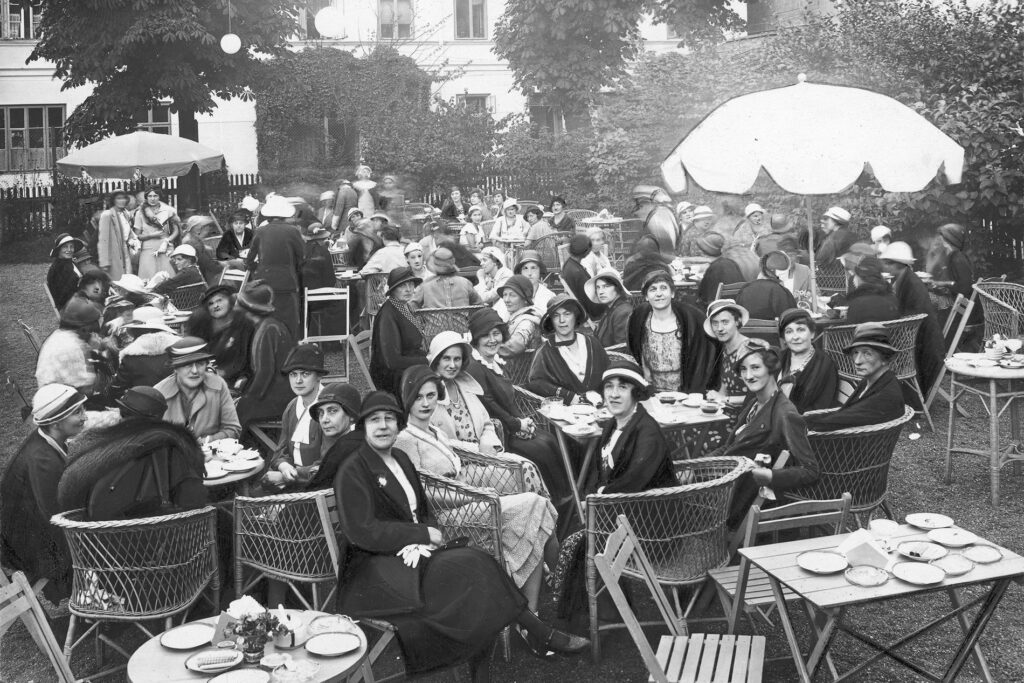
The 7th International Congress of Historical Sciences took place in Warsaw in 1933. The decision about organising the Congress in Poland, which was taken unanimously during the 6th International Congress of Historical Sciences in Oslo in 1928, was a mark of great distinction and appreciation for the rapid development of Polish historiography. Behind this success stood two men: Marceli Handelsman, who was the first to propose the idea of organising the Congress in Poland, and Bronisław Dembiński, who was the Member of the Board of the International Committee of Historical Sciences from 1926 – the year of its foundation. The preparations for the Congress began as early as in 1929. Bronisław Dembiński was elected Chairman of the Organising Committee, and Stefan Ehrenkreutz, Oskar Halecki, Marceli Handelsman and Wacław Sobieski became vice-chairmen. Tadeusz Manteuffel assumed the function of General Secretary. Substantial financial help (almost 100 thousand zlotys) was granted, despite the crisis, by the Polish government, mainly by the Ministry of Religious Denominations and Public Enlightenment.

Participants

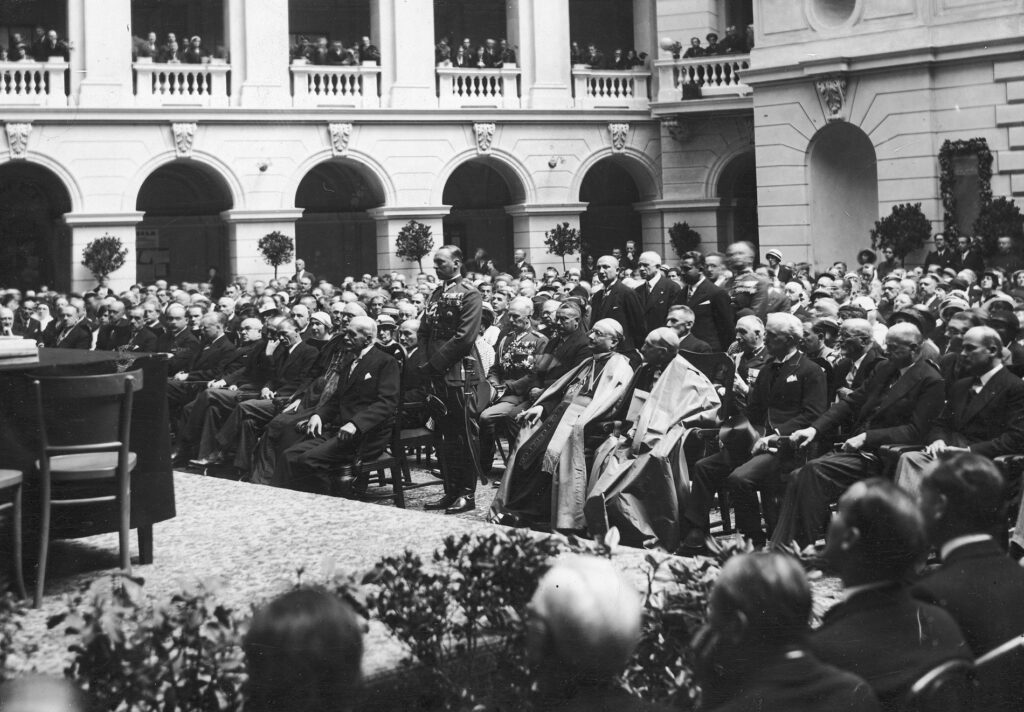
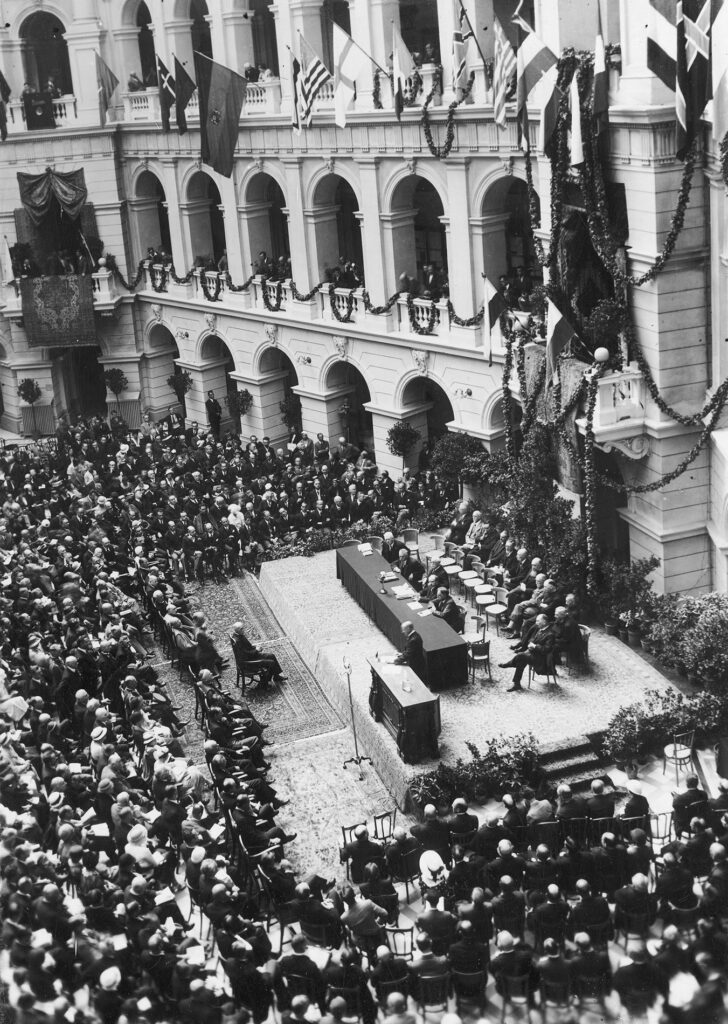
The Congress commenced on the 21st of September 1933 in the Main Auditorium of the Warsaw University of Technology. The most prominent politicians, including president Ignacy Mościcki, were present at the opening. 1100 historians from 31 countries took part in the Congress. Most strongly represented were scholars from Poland (over 60%), followed by participants from France, Italy, Germany and England.

Sessions

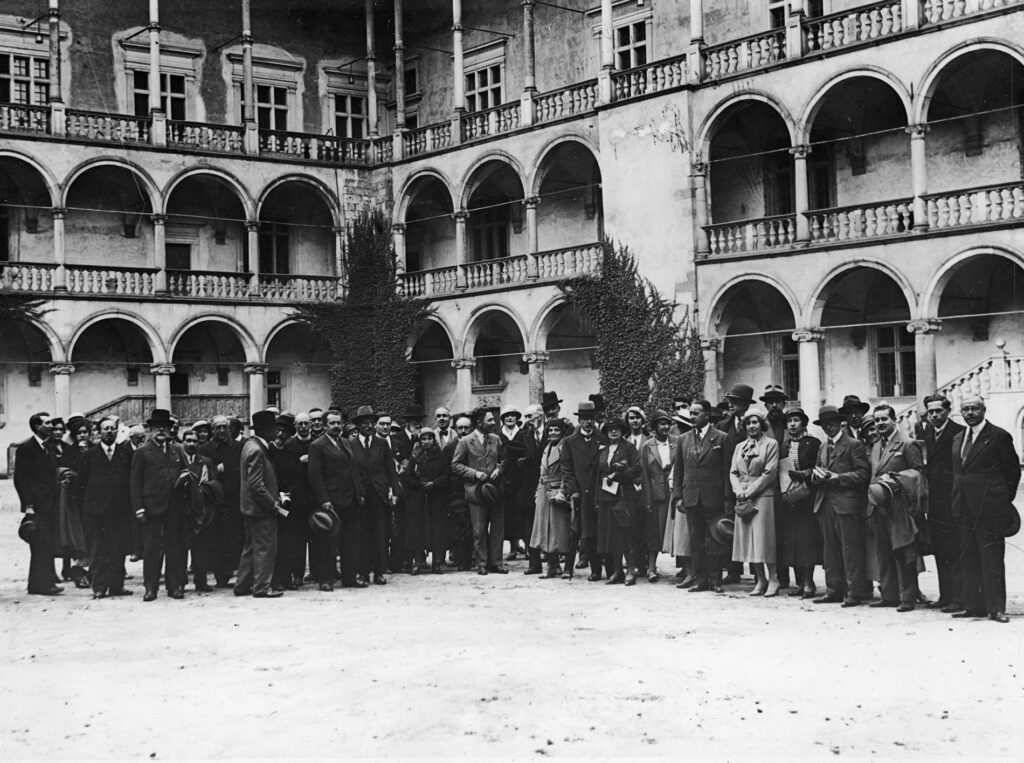
The Congress had 15 sections and 13 special sessions. The focus on discussing Polish themes was underlined in post-conference reports. Interestingly, the closing ceremony took place on the 28th of August in Kraków. The organisers provided a special train connection for the participants.

The organisation of the Warsaw Congress was assessed positively. Bronisław Dembiński was elected vice-president of CISH – the post he held until 1938. In his place another Polish scholar, Marceli Handelsman, was elected. These nominations reflected the considerable prestige which Polish historiography enjoyed at that time.

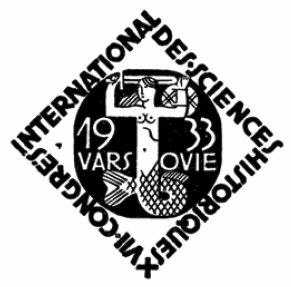
The logo of the 7th International Congress of Historical Sciences in Warsaw was designed by Edward Manteuffel-Szoege (1808-1940).

Source of illustrations – Narodowe Archiwum Cyfrowe: NAC 1-M-526-5; NAC 1-M-526-8; NAC 1-M-526-4; NAC 1-M-527-4
Bibliography
  • VIIe Congrès international des sciences historiques: Varsovie, du 21 au 28 août 1933, Warsaw 1933.
  • “VIIe Congrès International des Sciences Historiques: Rapports présentés au Congrès de Varsovie”, Bulletin of the International Committee of Historical Sciences, vol. 5 (1933).
  • VIIe Congrès International des Sciences Historiques. Résumés des Communications présentés au Congrès, Varsovie 1933, vol. 1-2., ed. T. Manteuffel, Warsaw 1933.
  • La Pologne au VIIe Congrès International des Sciences Historiques, Varsovie 1933, vol. 1-3, ed. O. Halecki, Warsaw 1933.
  • B. Dembiński, O. Halecki, M. Handelsman, L’historiographie Polonaise du XIXeme et du XXeme siecle: VII-e Congres International des Sciences Historiques Varsovie 1933, Warsaw 1933.

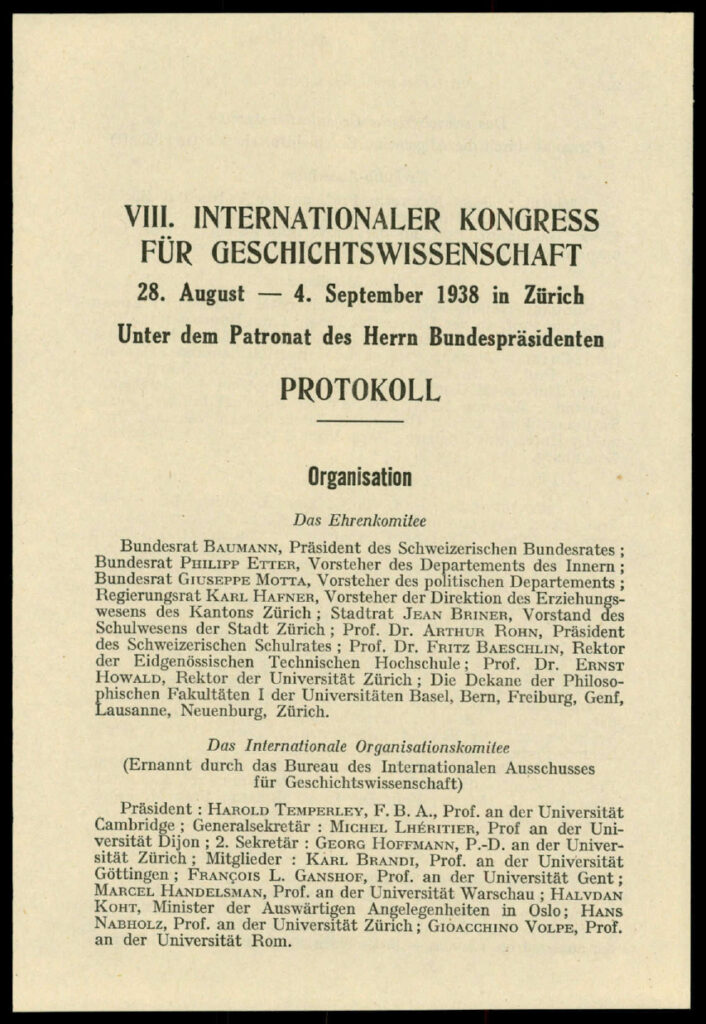
8th Congress – 28 August-4 September 1938

Economical and Political Challenges

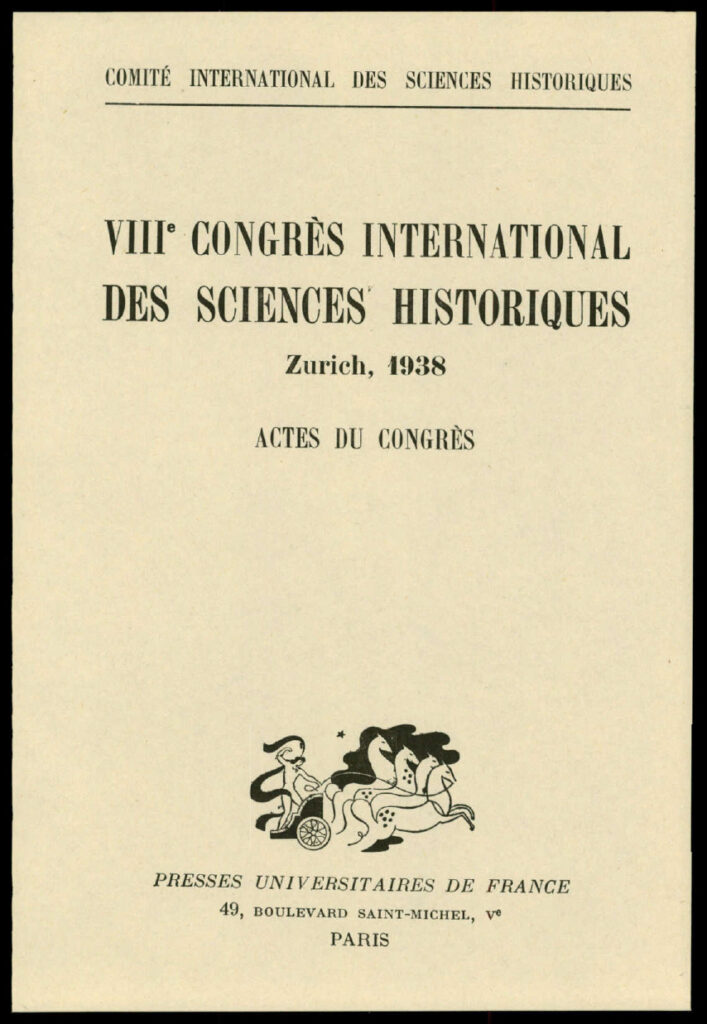
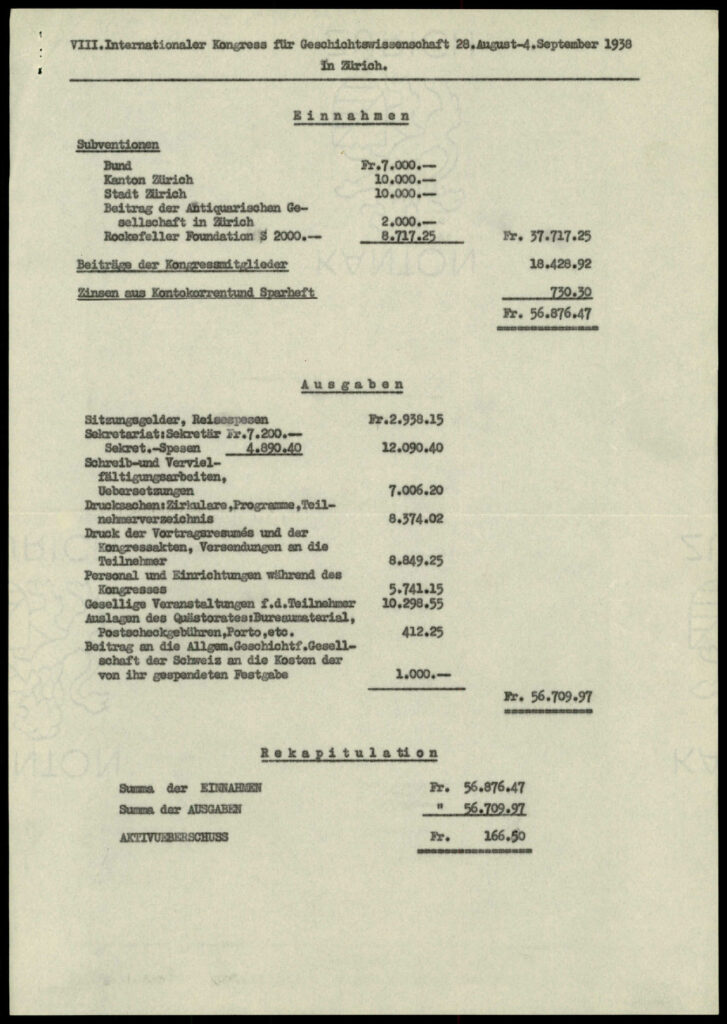
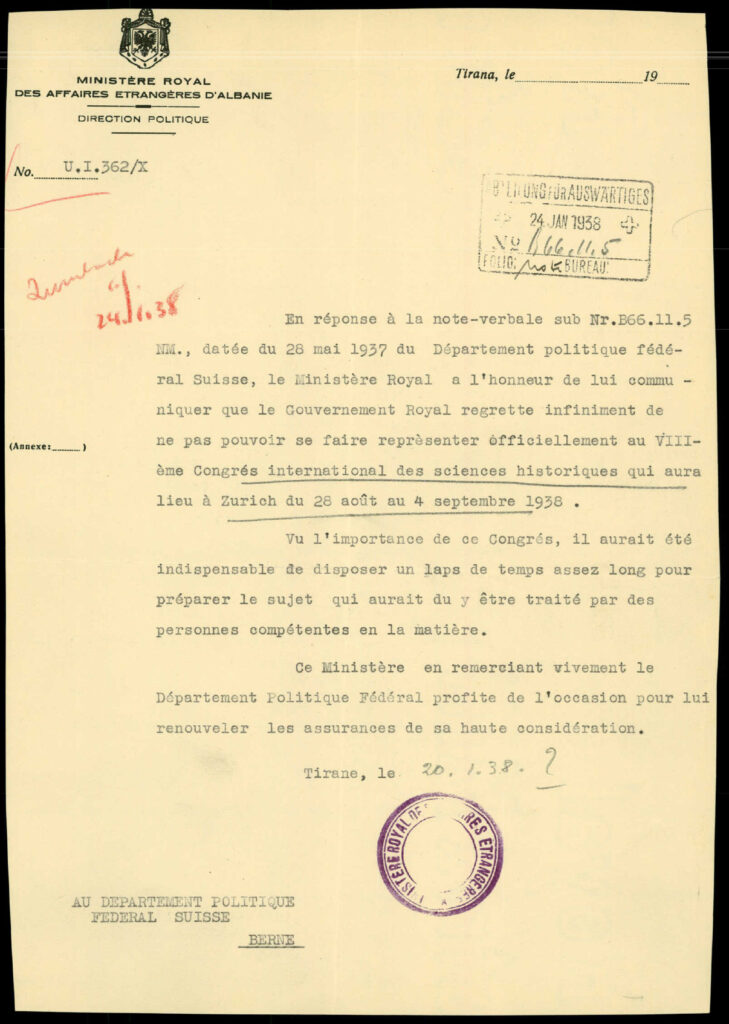
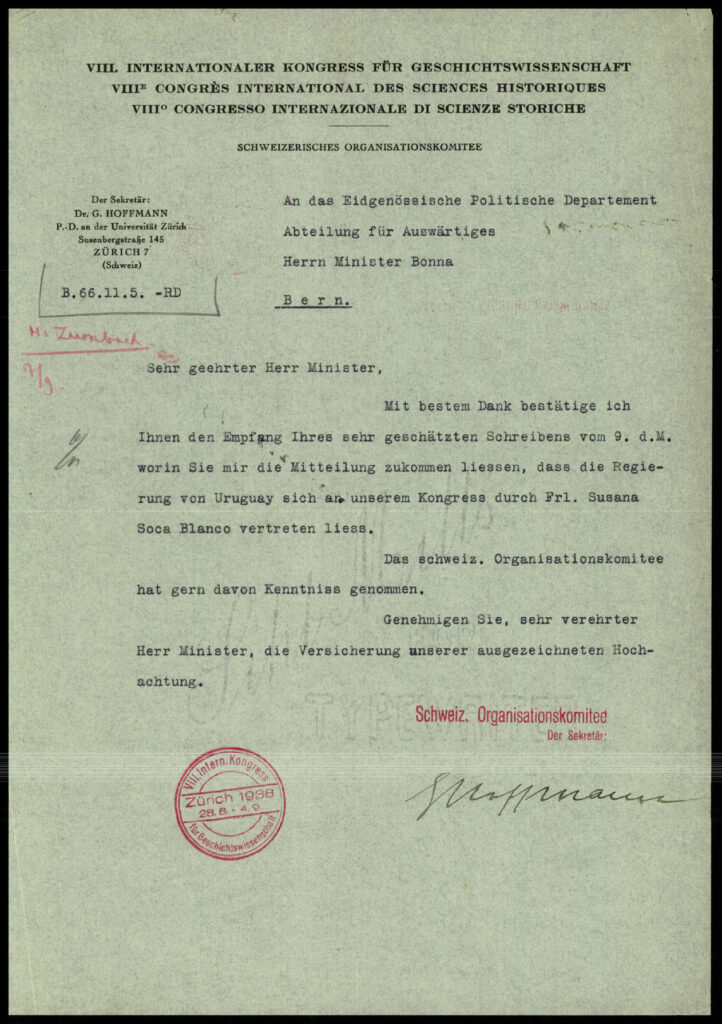
The 8th International Congress of Historical Sciences in Zurich began on 28 August and concluded on 4 September 1938. The decision to hold the Congress in Switzerland was made at the 7th International Congress of Historical Sciences in Warsaw in 1933. The candidacy of Zurich was submitted by Hans Nabholz, who presided over the newly established Organising Committee, with Georg Hoffmann as its secretary.

The Congress organisers had to cope with numerous financial problems (in the aftermath of the global economic crisis) and political challenges of the tense international situation. Hans Nabholz took every effort so that the Congress participants could remain neutral and open and address only historical issues during the debates. The situation got complicated in March 1938 due to the Anschluss of Austria and the suspension of diplomatic relations between Bern and Moscow (in response to Stalin’s internal policy). As a result the number of registered Congress participants dropped.

Participants

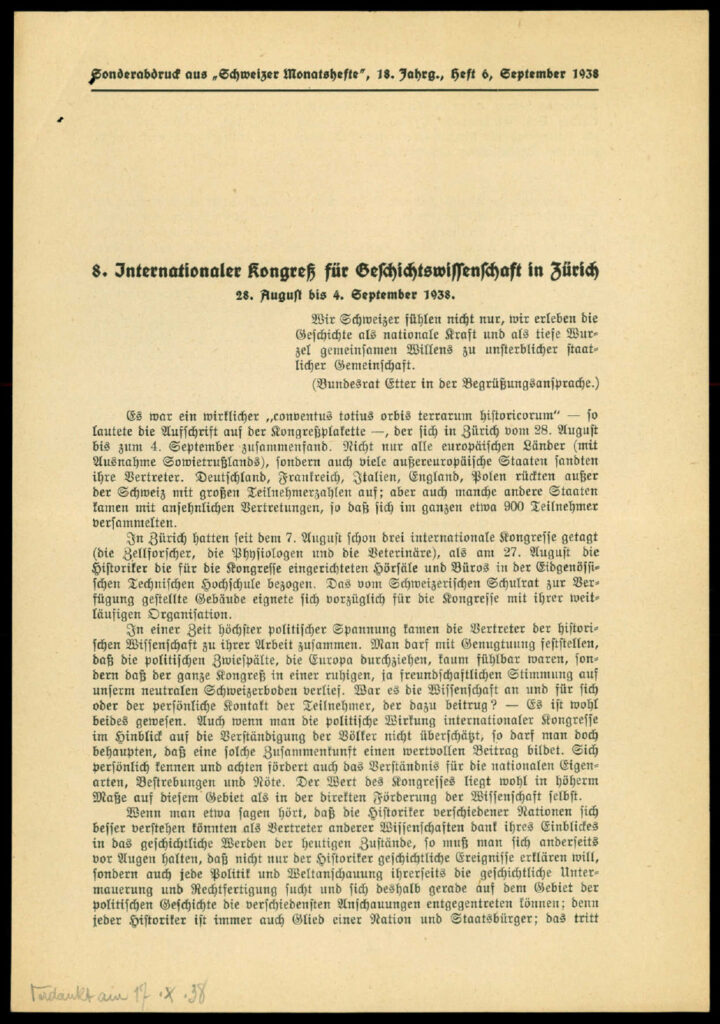
Ultimately, the Congress gathered 770 participants from 49 countries. Compared with the previous Congresses, in Oslo and Warsaw, this was a marked decrease. The biggest delegations included those from Switzerland, Germany, Poland, France, Italy, United Kingdom, USA, Belgium, and Czechoslovakia. No historians from the USSR came to the Congress.
The 1938 Congress took place in the shadow of coming war. Heightened tension was palpable throughout the event and therefore serious political debates and discussions of contemporary questions were avoided. The sessions were mainly dedicated to the methodology of history, ancient and medieval history, as well as modern history.

Bibliography
  • VIIIe Congres international des sciences historiques: Actes du congres, Zurich 1938.
  • VIIIe Congres international des sciences historiques: Communications présentées, Zurich 1938.
  • Adair E.R., The International Congress of Historical Sciences, „The Canadian Historical Review”, vol. 19 (1938), nr 4, s. 378-386.
  • Blanchet A., Congres international des sciences historiques a Zurich, „Journal des Savants”, Septembre-Octobre 1938.
  • Brandi K., Der internationale Historikerkongress in Zürich, „Historische Zeitschrift”, nr 159 (1939), s. 214-218.
  • Erdmann K.D., Die Ökumene der Historiker: Geschichte der Internationalen Historikerkongresse und des Comité international des sciences historiques, Göttingen 1987.
  • Pour préparer le prochain Congrés International des Sciences Historiques, „Annales d’histoire économique et sociale”, vol. 8, nr 37 (1936), s. 44-48.
  • Stadler P., Im Schatten der Kriegsgefahr: der internationale Historikerkongress in Zürich 1938, „Schweizer Monatshefte: Zeitschrift für Politik, Wirtschaft, Kultur”, Band 70 (1990), Heft 6, s. 483-495.

9th Congress – 28 August-3 September 1950

Rebirth after WWII

In April 1948, the CISH decided that the pre-war tradition of organising international meetings of historians should be continued. Paris was chosen for the place of the 9th Congress, the first after the end of World War II. The burden of organisation was taken by the French Committee for Historical Sciences, which assured that it would also deal with logistics issues, including accommodation for all participants and discounts on train travel around France. The French historians most involved in the organisation of the Congress were Robert Fawtier and Michel François.

Innovations

Due to the fact that during earlier congresses many sections were meeting at the same time, a different formula of speeches was announced. It was planned to agree and send a list of topics that they wanted to raise during the Congress. Above all, however, it was decided that within each section a leading paper would be prepared by a specialist in the given field, which would then be sent to participants, which was to enable them to read the text before Congress.

Participants

The Congress in Paris took place from August 28 to September 3, 1950, in the UNESCO building. Representatives of all historical fields from 30 countries arrived, in the number of almost 1,400. In the morning, seven sections were held (anthropology and demography, history of ideas, economic history, social history, history of civilization, political history, history of institutions), discussing the above-mentioned leading papers, which was published in the form of a book.
One of the topics discussed was the use of historical research demographics, which turned out to be a widely and long-discussed issue. A transcript of this discussion was published together with papers from the afternoon sessions, which were discussed in a traditional way (speeches had not been published before). The condition in this case was the appropriate attractiveness of the topics (they were to arouse the interest of all participants and stimulate comparative discussions).

New Topics and Key Issues

After the Congress ended, Michel François in the pages of the “Bibliothèque de l’École des chartes” asked himself and others questions that also occurred during the meeting in Paris – that is, the legitimacy of organising such large meetings and the rules that should apply to them. He believed that at the next congresses it would be necessary to select key issues that should then be developed by prominent specialists. A reasonable amount of time should be provided for their speeches, and the organisers should ensure that interested historians can participate in the discussion. Papers should be available beforehand so that the discussion is well prepared and thus more fruitful. He also believed that in the case of papers the division into sections became outdated and should be replaced by the selection of attractive topic.

Participants

Ultimately, the Congress gathered 770 participants from 49 countries. Compared with the previous Congresses, in Oslo and Warsaw, this was a marked decrease. The biggest delegations included those from Switzerland, Germany, Poland, France, Italy, United Kingdom, USA, Belgium, and Czechoslovakia. No historians from the USSR came to the Congress.
The 1938 Congress took place in the shadow of coming war. Heightened tension was palpable throughout the event and therefore serious political debates and discussions of contemporary questions were avoided. The sessions were mainly dedicated to the methodology of history, ancient and medieval history, as well as modern history.

Autor

Magdalena Heruday-Kiełczewska

Bibliography
  • IXe Congrès International des Sciences Historiques, Bibliothèque de l’École des chartes 07-1, 1948, p. 98-100.
  • IXe Congrès international des sciences historiques Paris, 28 août – 3 septembre 1950. I. Rapports, Paris 1950.
  • IXe Congrès International des Sciences Historiques, Paris, 28 août – 3 septembre 1950. II. Actes, Paris 1950.
  • J. Bourdon, La démographie au Congrès International des Sciences Historiques, Population 5-4, 1950, p. 755-756.
  • M. François, Le IXe Congrès International des Sciences Historiques, Bibliothèque de l’École des chartes 109-2, 1951, p. 300-303.

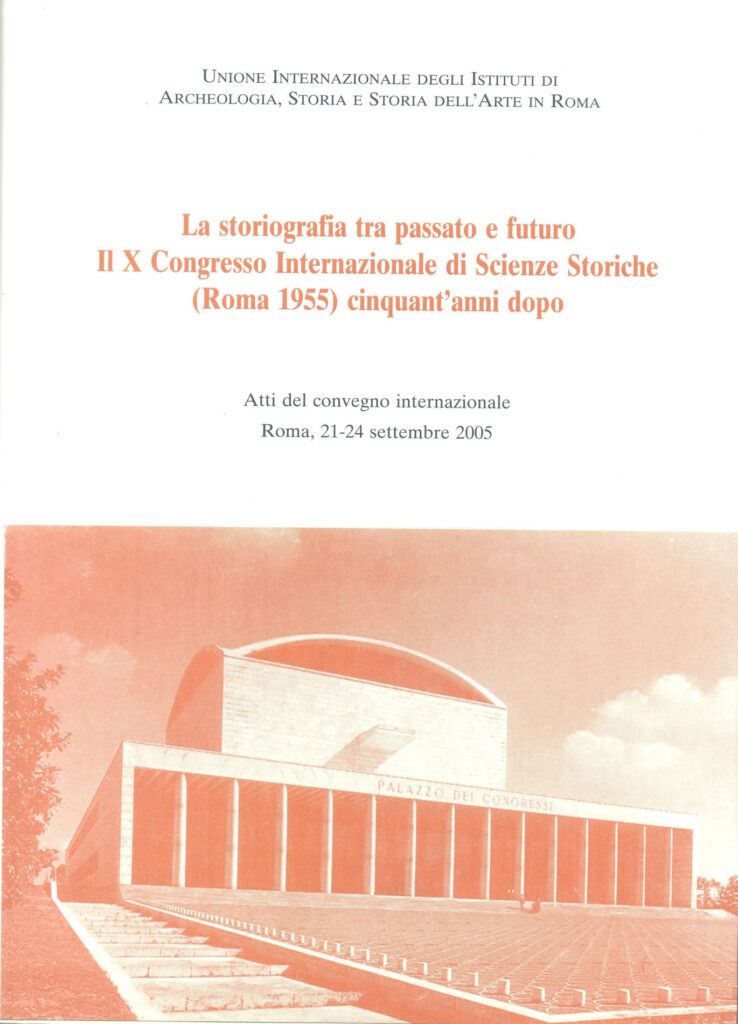
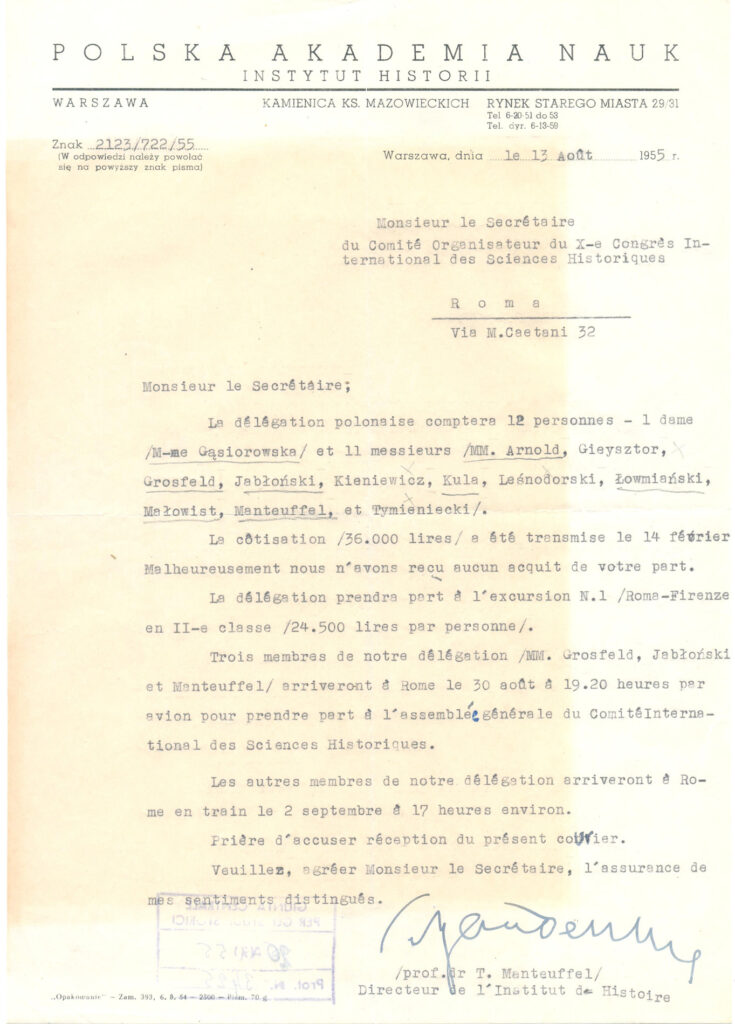
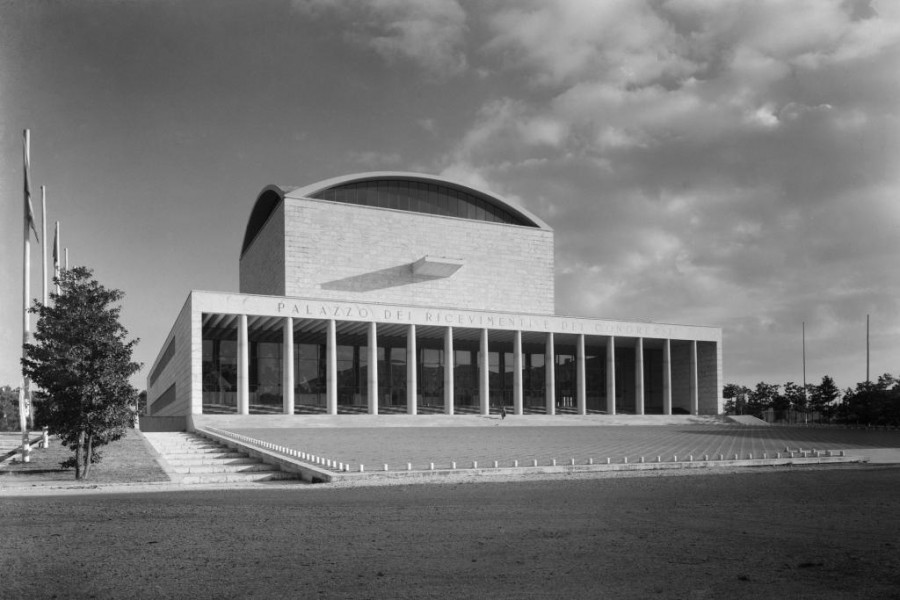
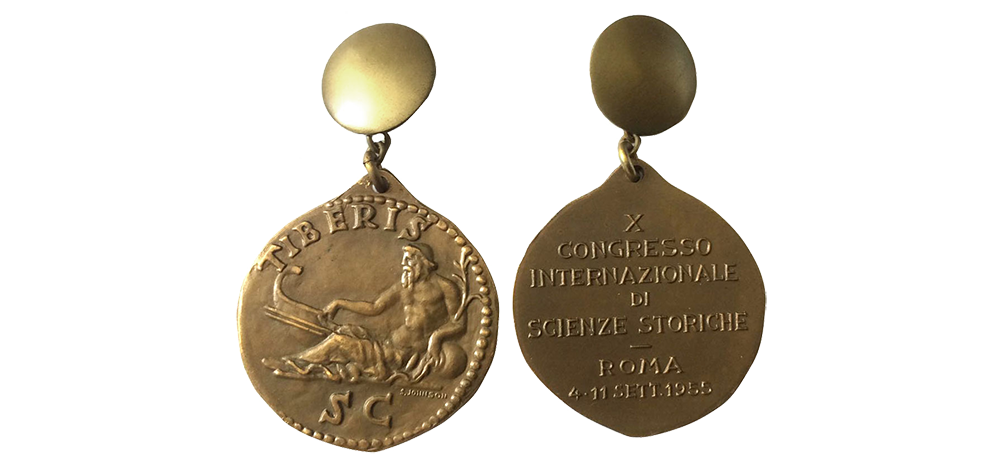
10th Congress – 4-11 September 1955

Diversified Historiographies

The 10th International Congress of Historical Sciences took place in Rome on 4-11 September 1955. Its preparation was carried out first by Luigi Salvatorelli and then, after the General Assembly in Brussels in 1952, by Federico Chabod. In reply to the criticism aired by some countries, claiming that the previous Congress, held in Paris in 1950, was dominated by French historiography, this time historical committees from other countries were more actively involved in the preparation of the event.
As a result, the turnout was much higher than that in Paris. The organisers received as many as 1,633 applications. Around 1,500 scholars actually took part, 220 of whom delivered papers. The number of French historians (320) and Italians (318) was almost the same. However, the Italians had fewer papers (33 vs. 49 ones delivered by the French). Less numerous delegations included the English (212, with 25 papers), citizens of the Federal Republic of Germany (150, with 22 papers), Americans (80 and 24 papers), Yugoslavians (68, with no paper), Danes (54, with 3 papers), Belgians (53, with 5 papers), Austrians (49, with 7 papers), the Swiss (48, with 7 papers), and the Dutch (42, with 4 papers).

Sections

As to the organisation of the event, the division of active participation into papers and reports statements was retained. Unlike the preceding Congress, this one restored chronological sections, assuming that time is the key category for the historian. Faced with starting decolonisation, which led to the independence of many countries in Africa and Asia, the organisers sought to make the panels extensive enough so as not to exclude historians from outside Europe. This led to the division into four chronological sections (antiquity, middle ages, modern era, and contemporary times) and into a few additional ones, dedicated to auxiliary sciences and methodology.

Broader Approach

The novelty of the Congress included papers summing up historical studies of the preceding decade. This task was assumed by eminent specialists: Arnaldo Momigliano for antiquity, Fernand Vercauteren (replaced by Yves Renouard) for the middle ages, Gerhard Ritter for the early modern times, and Pierre Renouvin for the contemporary times. The common denominator of all of these papers was a call for a broader historical approach, uniting into one whole political, social and economic questions. At the same time, the speakers stressed the necessity of studies not limited to a single country but transcending national borders. This appeal referred not only to the iron curtain separating the West and the East, but also to the democratic states. A fresh perspective was applied by historians from the United States (Oscar Handlin, Owen Lattimore). Referring to a theory which recognised the westwards shift of the frontier as a constitutive factor of the American people, they called for a more interdisciplinary approach.
An important topic recurrent throughout the Congress was an attempt to redefine historicism. The reference point in this respect was a reflection of Benedetto Croce, who died in 1952. According to Francesco Collotti, modern historicism should avoid the pitfalls of determinism, seeking instead universal principles of the historical process (both in the idealist and in the Marxist approach), at the same time rejecting scepticism. The scholar indicated that idea evolves along with the society and therefore the modern version of historicism was to strive to reconcile the temporary character of values with their universality.

Representatives of the East

A breakthrough of the Congress in Rome was the participation of representatives of the USSR, for the first time after the conclusion of World War II. The Soviet delegation included 13 scholars (who delivered 11 papers). They were followed by delegates from the other countries of the Eastern Bloc: Romania (27), Poland (12), Czechoslovakia (7), and Hungary (5). The arrival of guests from behind the iron curtain was possible only at the very last moment, thanks to a short period of political “thaw” following Stalin’s death. The participation of delegates from those countries was a matter of concern for the organisers, who feared fierce arguments between them and émigré historians. There were no incidents, however. The activity of the states of the socialist bloc was favourably received by both Western and Soviet press. The latter covered the event extensively and showed it as a token of intensifying collaboration between the East and the West. Still, the Soviet delegation tried to consistently and persistently emphasise faithfulness to Stalin’s historical policy. It therefore criticised the father of Soviet historiography Mikhail Pokrovsky, who was scathingly critical of tsarist imperialism, which was at variance with Stalinist attempt to restore the Soviet history to former grace. Despite the “thaw”, the historians from the USSR did get involved into ideological struggle. However, the paper of the head of the Soviet delegation, Anna Mikhailovna Pankratova, who countered the historicism of Benedetto Croce, laid bare the inadequate expertise and ossified views of Marxist historiography. Still, the dogmatism of Soviet speakers did not prevent shaping of a friendly atmosphere. The culminating point was the invitation to Moscow of the participants of a meeting preparing the next congress.

Thr Church and the Historical Sciences

The presence of historians from the Eastern Bloc was offset by the heightened activity during the Congress of representatives of the Vatican. Not only did they participate in the preparations to the Congress, taking part in the CISH General Assembly in 1952, but they also delivered many papers during the event. One of the major events accompanying the debates themselves was an audience granted to the participants by Pope Pius XII at the Vatican. This event was extensively covered by major Italian newspapers. The address of the Holy Father explained the position of the Church towards the historical sciences and, more generally, to the challenges of the time. There was a marked change in comparison with the previous Congress in Rome held 52 years before; back then the pope had considered himself a hostage of the secular Italian state. Pius XII clearly stressed that the Church, changing through the centuries, both adopted and contributed to national culture. As the Holy Father highlighted, the Catholic Church did not identify with the European civilisation but, through the proclamation of the Gospel, was engaged in a dialogue with various cultures.

As to the Congress in Rome, the reports and papers were published in seven volumes exceptionally prior to the debates and were disseminated among the participants. The acts of the Congress came out very soon, too.

Autor

Andrea Mariani

Bibliography
  • Corriere della Sera, 1955, nr 213 (8 IX)
  • La Stampa, 1955, nr 213 (8 IX)
  • Comitato Internazionale di Scienze Storiche. X Congresso Internazionale di Scienze Storiche, Roma 4-11 settembre 1955. Relazioni; t. 1: Metodologia – Problemi generali – Scienze ausiliarie della storia; t. 2, Storia dell’Antichità; t. 3: Storia del Medioevo; t. 4: Storia moderna; t. 5: Storia contemporanea; t. 6: Relazioni generali e supplementi, t. 7: Riassunti delle comunicazioni, Firenze 1955.
  • Comitato Internazionale di Scienze Storiche. Atti del X Congresso Internazionale di Scienze Storiche, Roma 4-11 settembre 1955, Roma 1957.
  • K.D. Erdmann, Die Ökumene der Historiker. Geschichte der Internationalen Historikerkongresse und des Comité International des Sciences Historiques, Göttingen 1987.
  • P. Prodi, Il X Congresso Internazionale di Scienze Storiche. Roma 1955. Cinquant’anni di distanza, [w:] Il X Congresso Internazionale di Scienze Storiche. Roma 1955. Cinquant’anni di distanza. Atti del convegno internazionale Roma, 21-24 settembre 2005, ed. Manuel Espadas Burgos, M. Gras, M. Matheus, M. Miglio, Roma 2008, 9-23.

11th Congress – 21-28 August 1960

Growing International Tensions

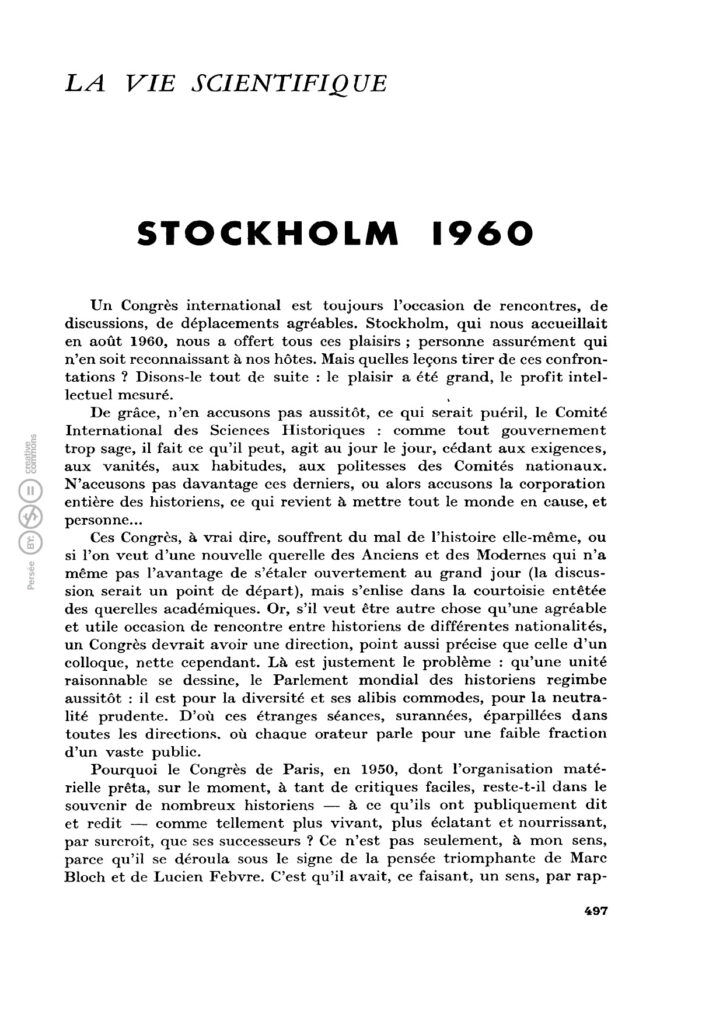
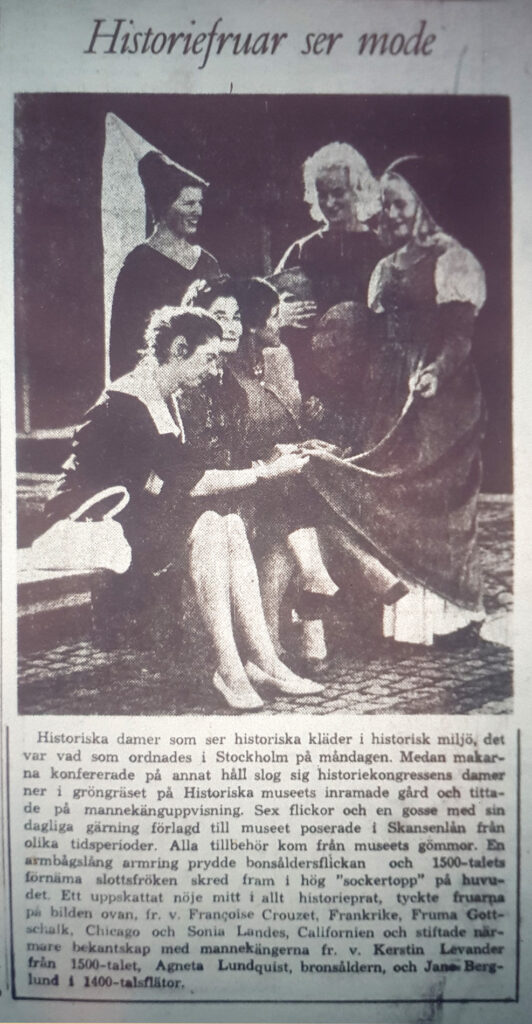
The 11th International Congress of Historical Sciences took place in Stockholm on 21-28 August 1960. The ideological atmosphere of the event set in neutral Sweden during the Cold War period was largely influenced by growing international tensions in Europe and beyond. The advantages and disadvantages of Marxism in its various forms were at the heart of the debate, as was the more general question of structural history and historical writing methods derived from the tradition of historicism.

Participants

The Congress was attended by slightly more than 2,000 scholars (including accompanying persons). Attendance was about the same as in Rome five years earlier. Most continents had their representatives – from Cyprus and Morocco to Indonesia and Mongolia. There were no representatives of China and sub-Saharan Africa. Historians from Europe and North America dominated, which was reflected in the languages used during the session; preference was given to English, French and German.

Torvald T:son Höjer, professor of Stockholm University, was the principal organiser of the Congress. Among his collaborators were e.g. Sir Charles Webster, former President of the British Academy, and Hans Kohn from the City College of New York. They tried to protect the academic integrity of the Congress against “partisan” ideological attacks, but they were only partially successful. Many participants complained about controversial speeches and unscientific arguments.

Controversies on Marxism

One of them was Sten Carlsson, a professor of history at Uppsala University. In a comprehensive report in the daily Svenska Dagbladet (3 September 1960) he wrote how Peter Laslett, Werner Conze, Halvdan Koht, and Hans Rothfels tried to view the Marxist interpretation of history from a certain perspective yet were censured by the orthodox supporters of Marxism from Eastern Europe. At the same time, according to Carlsson, unlike during the 1955 Congress, historians from the Eastern Bloc countries delivered a number of “sophisticated” papers. He highlighted in particular the contribution of Władysław Czapliński from Poland and of Arkadiy Lavrovich Sidorov from the Soviet Union. Despite ideological conflicts which curbed intellectual debate, Carlsson, himself no communist, was optimistic about the development of historiography in Eastern Europe.

Autor

Johan Östling

Bibliography
  • 11e congrès international des sciences historiques, Stockholm, 21-28 août 1960, Stockholm 1960.
  • 11e congrès international des sciences historiques: rapports, vol. 1-5, Stockholm 1960.
  • Actes du congrès. XIe Congres international des sciences historiques, Stockholm, 21-28 août 1960, Stockholm 1962.
  • F. Braudel, “Stockholm 1960”, Annales. Économies, Sociétés, Civilisations 16e année no. 3, 1961, 497-500.
  • K.D. Erdmann, Towards a Global Community of Historians. The International Historical Congresses and the International Committee of Historical Sciences. 1898-2000, ed. J. Kocka New York–Oxford 2005.
  • Mouvements ouvriers et dépression économique de 1929 à 1939: étude et rapports préparés pour le VIIe colloque international de la Commission internationale d’histoire, ed. D. Fauvel-Rouif, Assen 1966.
  • Résumés des communications. XIe Congrès international des sciences historiques, Stockholm, 21-28 août 1960, Stockholm 1960.

12th Congress – 28 August-5 September 1965

Celebrating 600 Years of the University of Vienna

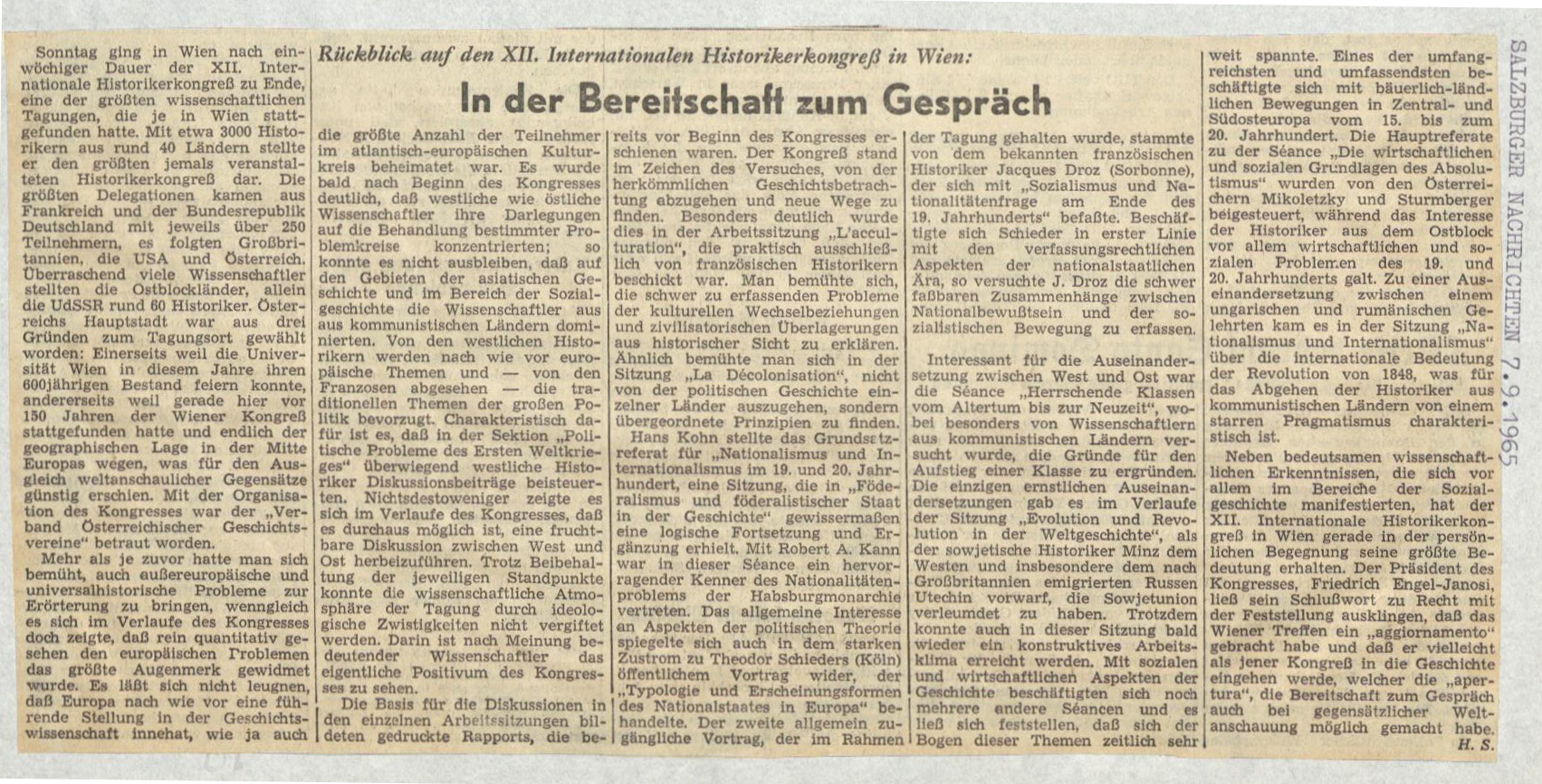
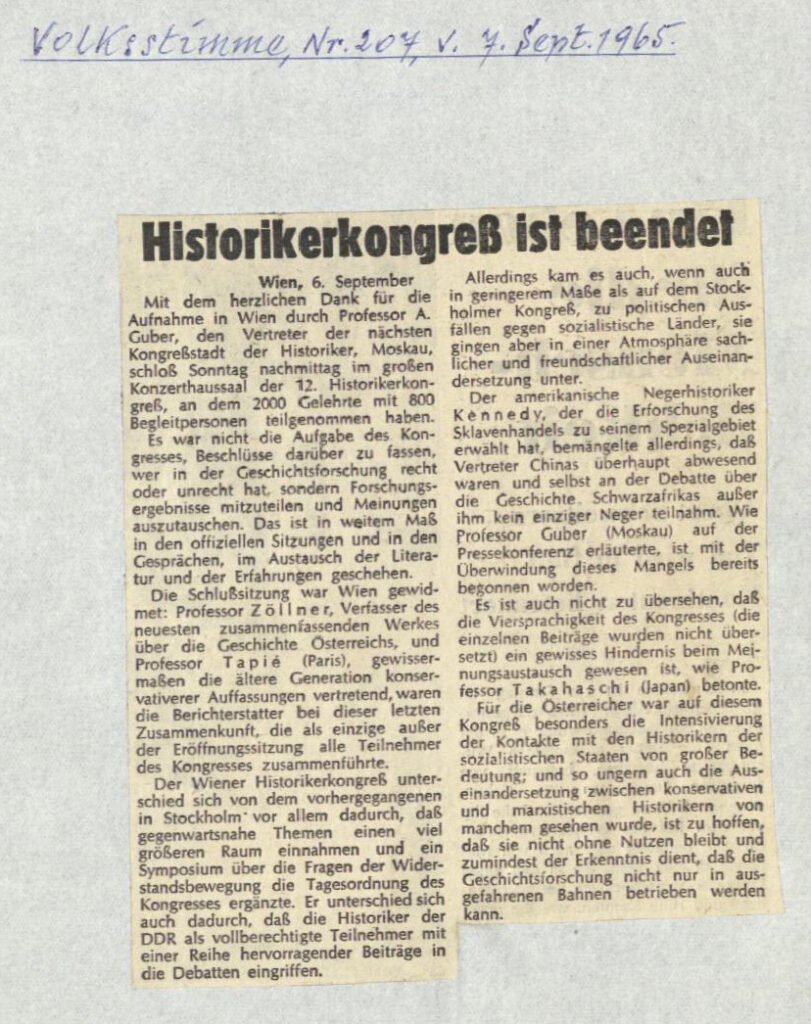
The 12th International Congress of Historical Sciences in Vienna began on 28 August 1965 and concluded on 5 September 1965.

The application of Vienna as the organiser of the Congress was submitted during the General Assembly of the International Committee of Historical Sciences, held in the course of the 10th International Congress of Historical Sciences in Rome on 11 September 1955. The submission was made by the delegation of Austrian historians headed by Heinrich Fichten and Gotbert Moro. The 12th International Congress of Historical Sciences was to be linked with the 600th anniversary of the University of Vienna. The candidacy of Vienna was ultimately approved at the 11th International Congress of Historical Sciences in Stockholm in 1960.

Participants

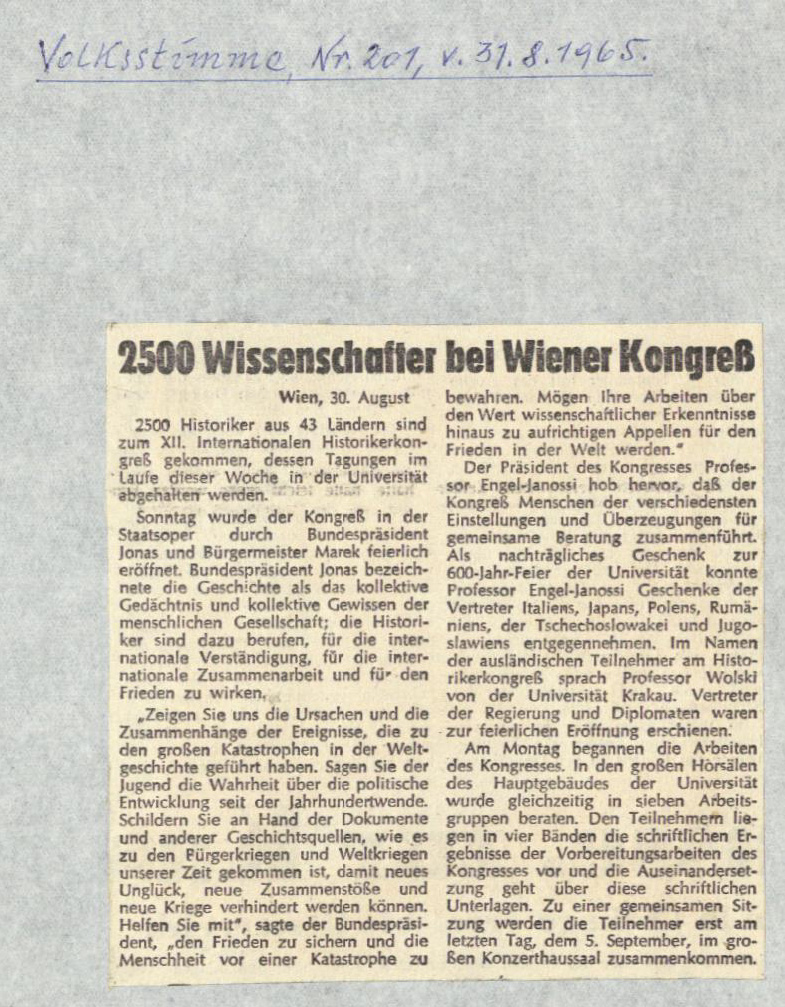
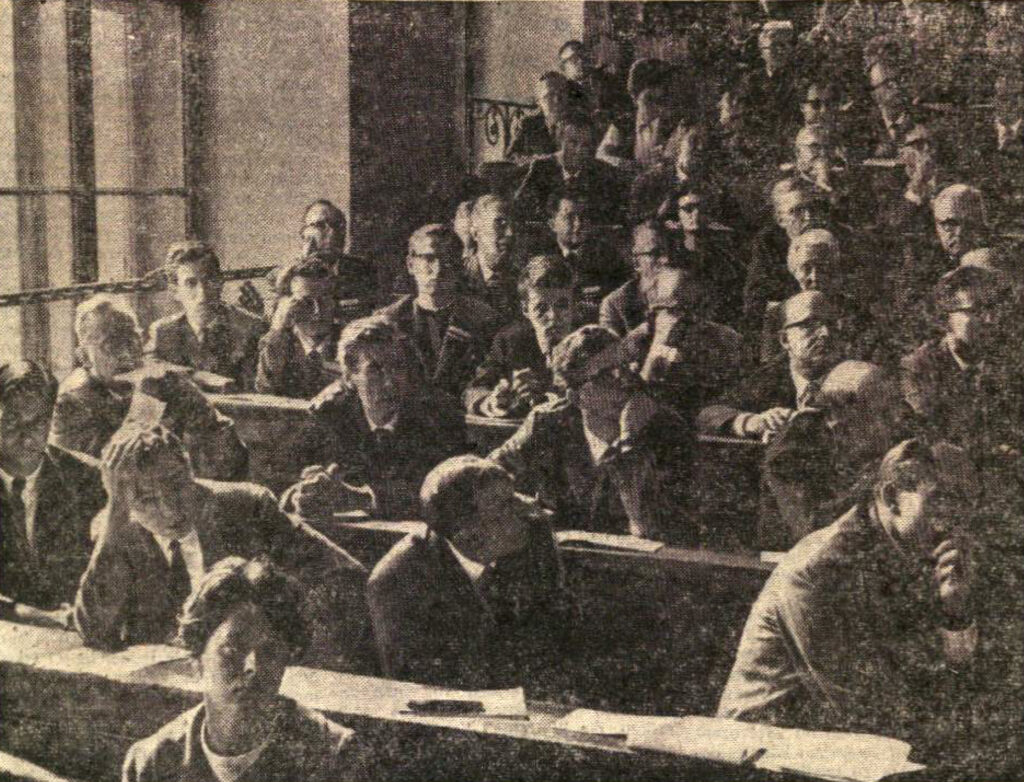
The Congress attracted around 2,500 participants from 43 countries. The most numerous were historians from France and the Federal Republic of Germany; no less numerous were delegations from the United Kingdom, the USA, Austria, and the USSR. The Congress was honoured to host historians of such stature as Aleksander Gieysztor (Poland), Erich Zöllner (Austria), Victor-Lucien Tapié (France), and Jacques Droz (France).

The Congress was launched in the Viennese State Opera. The inaugural lecture was delivered by Alphons Lhotsky.

Nationalism and Internationalism

The Congress addressed major questions concerning the methodology of history, general history and history of historiography. Of great interest were panels dedicated to ancient and medieval history. However, one of the principal themes discussed during the Congress was the question of nationalism and internationalism in the 19th and 20th centuries.

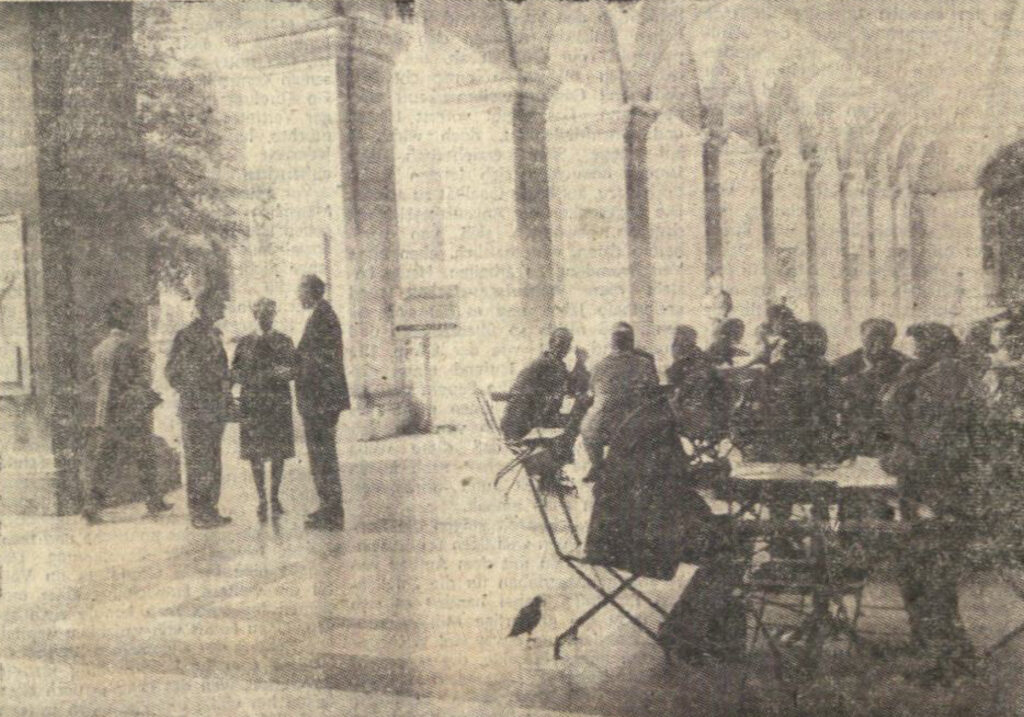
The Congress in Vienna was greatly successful thanks to efficient logistics and weight of the questions addressed.

Bibliography
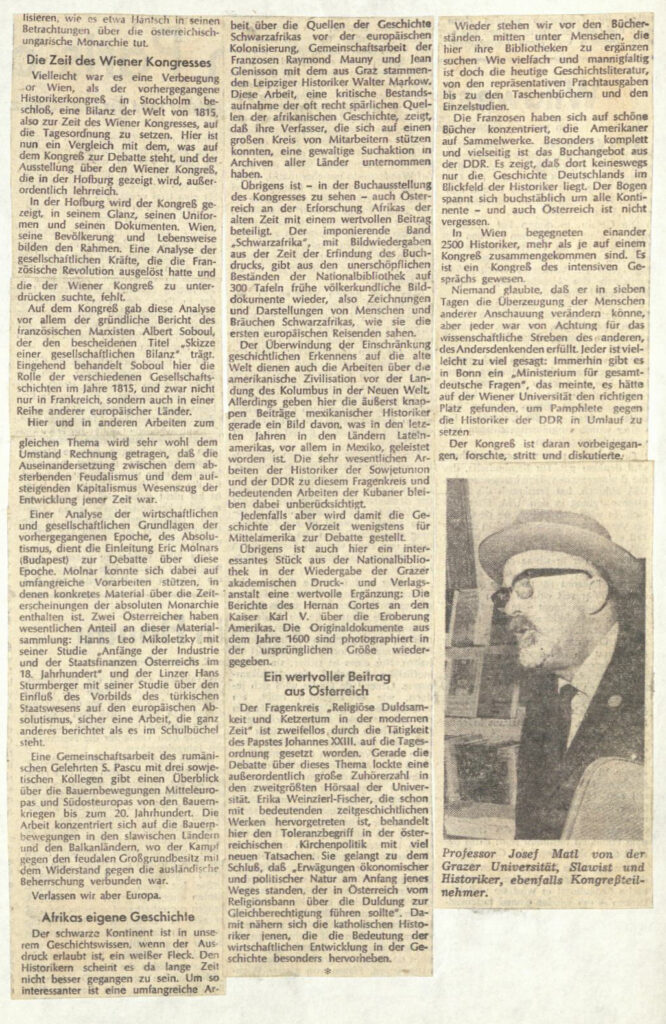
  • 2500 Wissenschaftler bei Wiener Kongreß, Volksstimme 201 (1965).
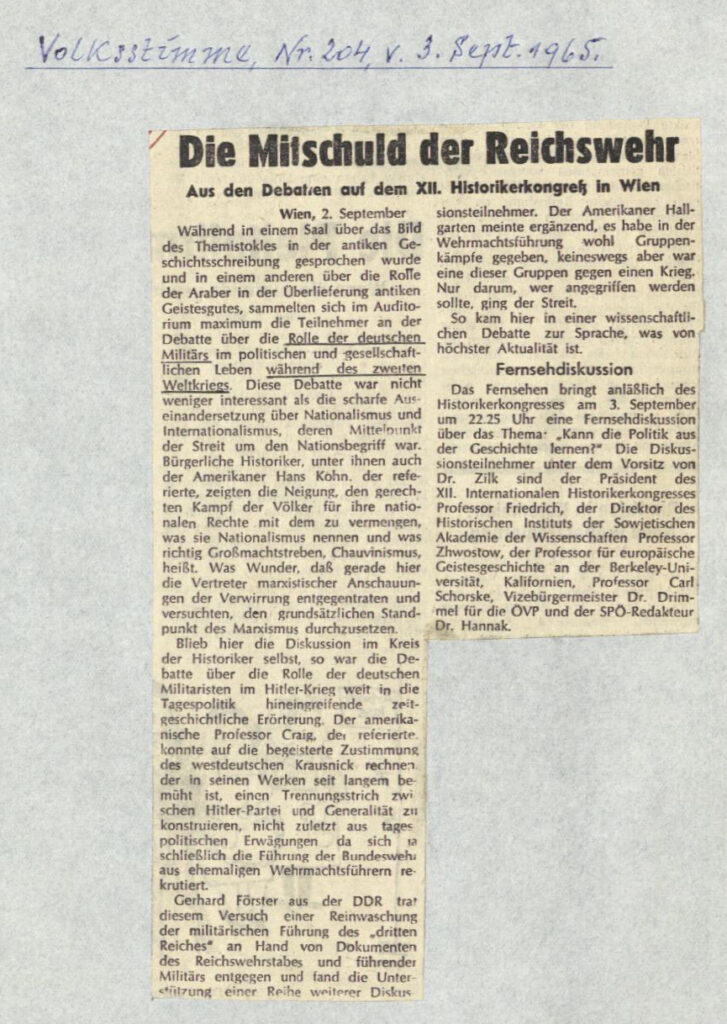
  • Die Mitschuld der Reichswehr. Aus den Debatten auf dem XII. Historikerkongreß in Wien, Volksstimme 204 (1965).
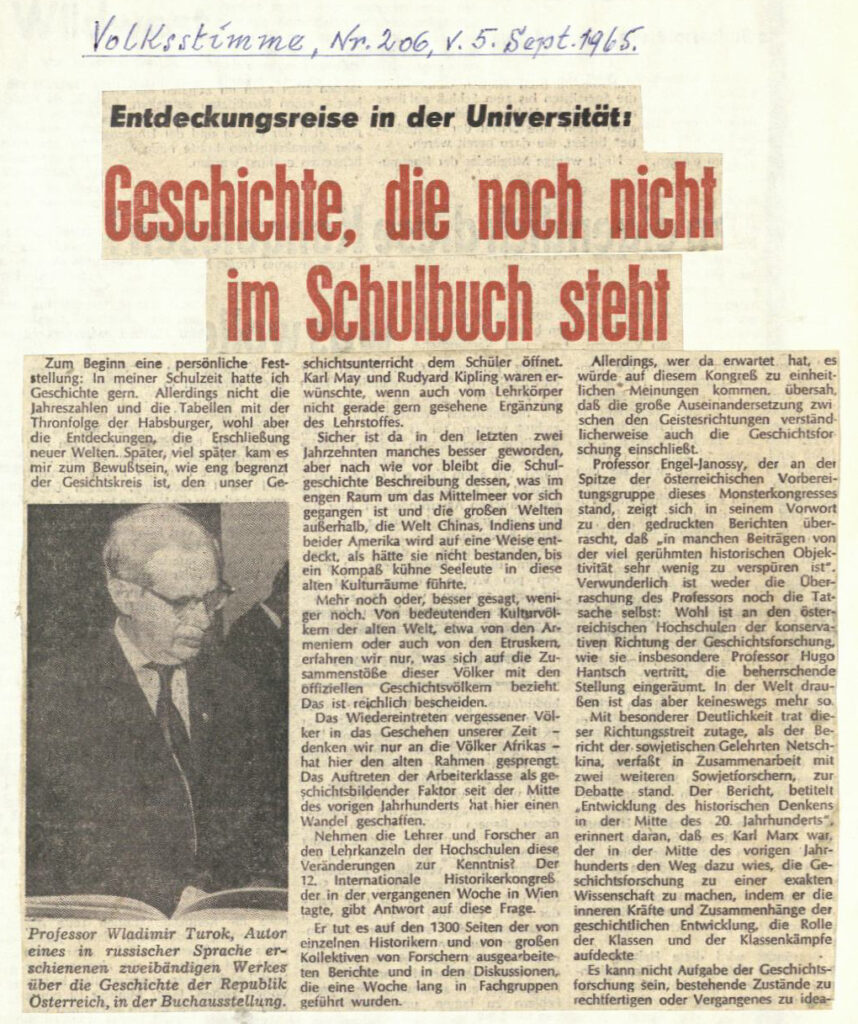
  • Geschichte, die noch nicht im Schulbuch steht, Volksstimme 206 (1965).
  • H.S., Rückblick auf den XII. InternationalenHistorikerkongreß in Wien: In der Bereitschaft zum Gespräch, Salzburger Nachrichten, 7.09.1965.
  • Historikerkongreß ist beendet, Volksstimme 207 (1965)
  • La Pologne au XIIe Congres International des Sciences Historiques a Vienne, Warszawa 1965.

13th Congress – 16-23 August 1970

In the Eastern Bloc

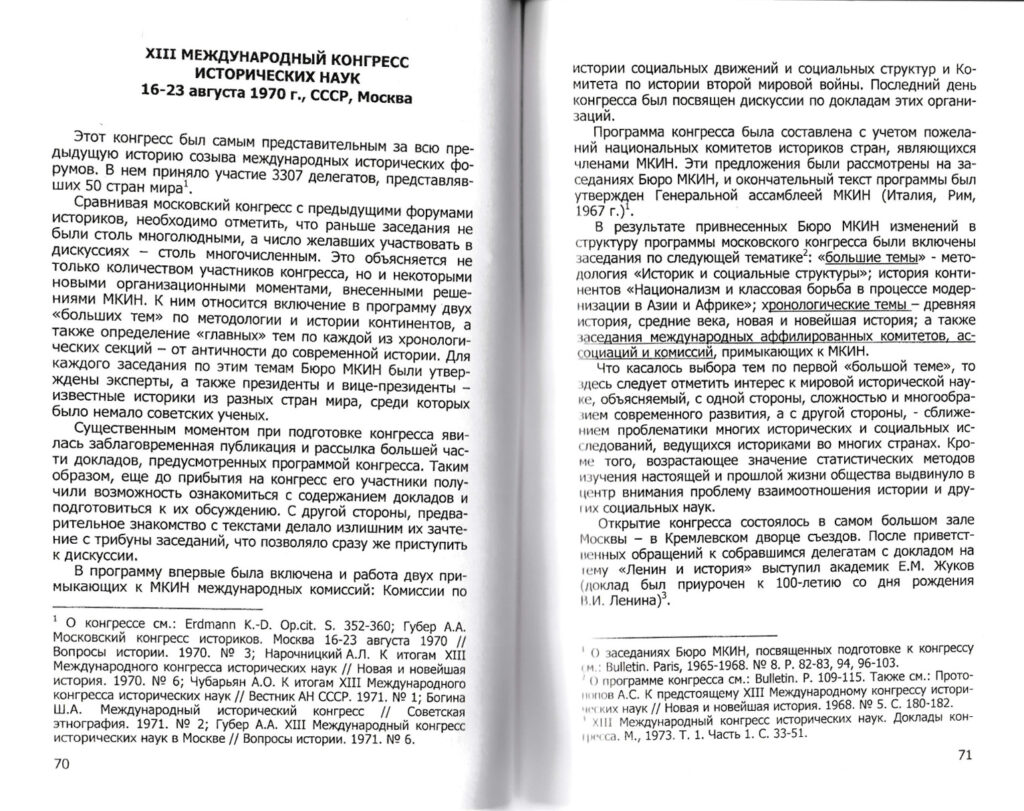
The 13th International Congress of Historical Sciences took place in Moscow on 16-23 August 1970. It gathered 3,307 delegates from 50 countries, including as many as 1,283 from the USSR. Quite numerous delegations came from the other states of the Eastern Bloc; Poland sent the largest number of participants (162 scholars), and was followed by Bulgaria (160), GDR (130), and Hungary (110). Furthermore, 223 historians came from the US, 173 from France, 118 from Yugoslavia, and 108 from the Federal Republic of Germany.

Major Themes

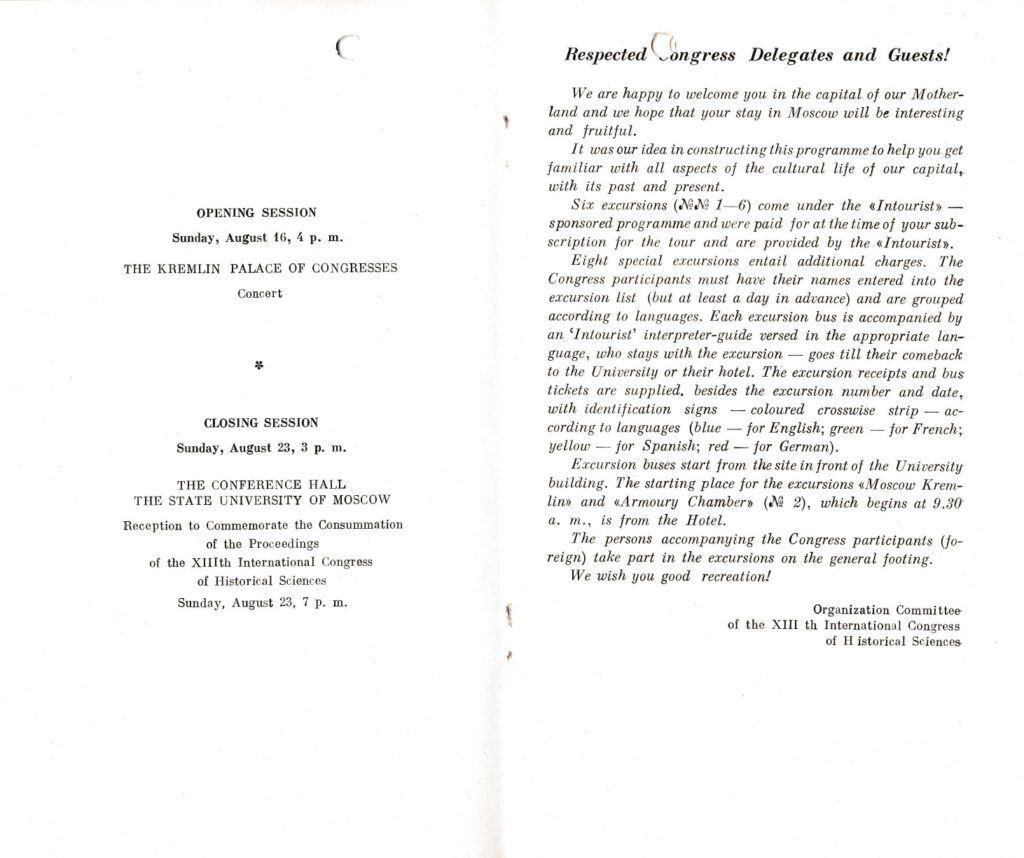
The Congress agenda addressed two so-called major themes. One concerned the methodology of history, the other the history of the continents. There were also chronological sections. During the Congress, there were also meetings of multiple commissions and associations affiliated at CISH, including the Committee for History of Second World War, Commission of Military History, Commission for Studies on the History of Social Structures and Movements, of the International Association of Byzantine Studies, International Association of the History of Law and Institutions, Commission of the History of the Press, Commission of Historical Slavic Studies, Commission for the History of Towns, Commission for the History of Universities, the Bibliographic Commission, and the Commission on the History of French Revolution. A special symposium was dedicated to the role of Vladimir Lenin in the development of the historical sciences, with a lecture by Yevgeniy Zhukov titled Lenin and History.

Relevant literature dedicated to the Congress indicates that it was attended by the highest number of participants in the history of these events. Its special merit lay in the identification of two main themes and a chronological division of the other sessions. The organisation and preparation were spoken highly of, as was the fact that the Congress was held in an air allowing a free exchange of ideas and views.

Some of the lectures, upon their approval by the Presidium of the Congress, were translated, printed out and handed out or sent in advance to the debate participants.
Apart from the Congress scholarly agenda, the participants had at their disposal all kinds of tourist attractions, such as tours of Moscow, with its museums, galleries and Orthodox churches.

Bibliography
  • XIII Mezhdunarodnyj Kongress Istoricheskikh Nauk 16-23 avgusta 1970 g., SSSR, Moskva, in: Rossijskie istoriki na mezhdunarodnykh kongressakh istoricheskikh nauk 1900-200 gg. Istoricheskij obzor, ed. Sergej L. Tikhvinskij, Moskva 2005, 70-83.
  • XIII Mezhdunarodnyj Kongress Istoricheskikh Nauk Moskva, 16-23 avgusta 1970 goda. Doklady kongressa, v. 1, Moskva 1973.

14th Congress – 22-29 August 1975

In the Western Bloc

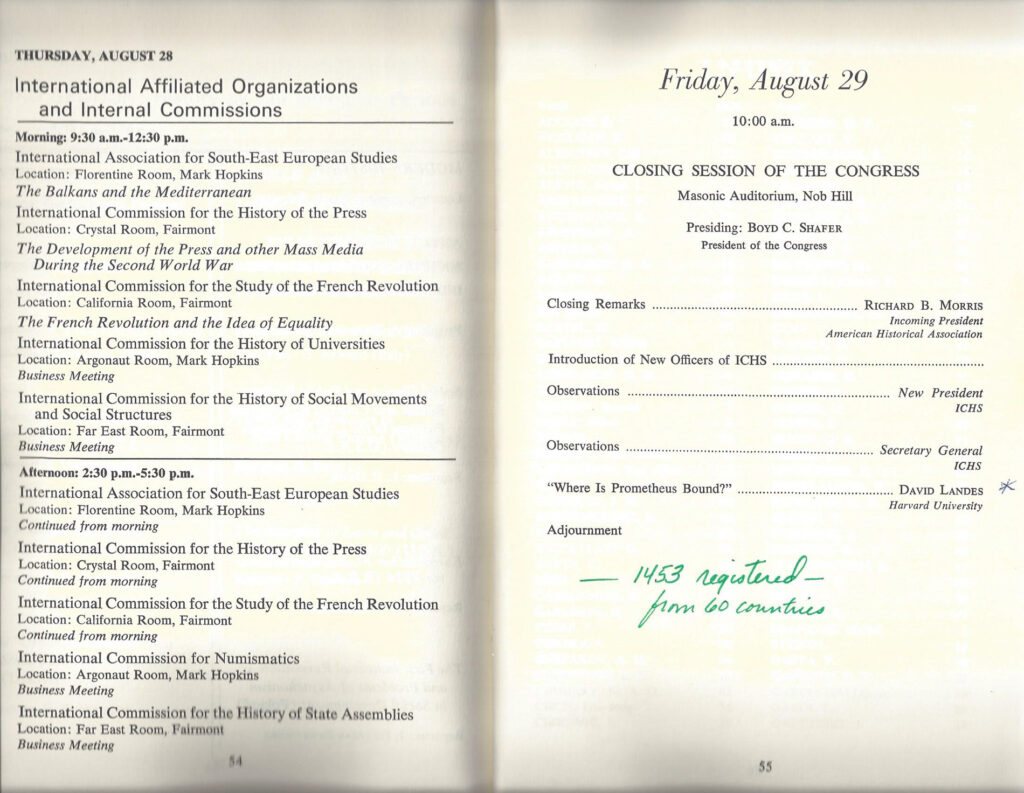
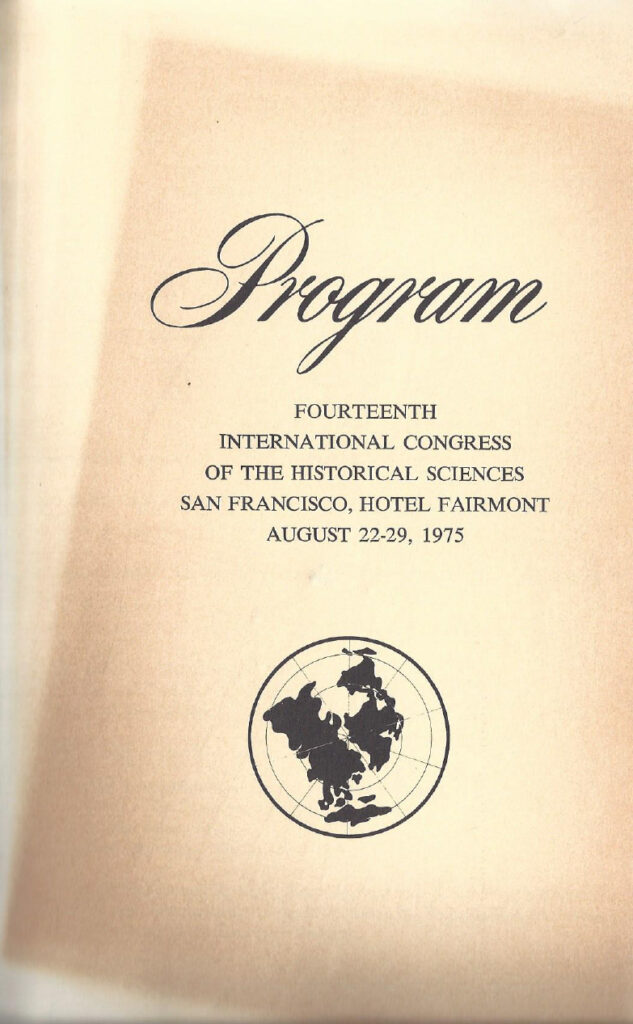
The 14th International Congress of Historical Sciences took place in San Francisco on 22-29 August 1975. The US Organising Committee was presided over by Donald Treadgold. Boyd C. Shafer was Chairman of the Congress and Richard Schlatter its Executive Director. Among the participants there were many luminaries of historical sciences at that time, among others Bernard Bailyn (USA), Karl Dietrich Erdmann (FRG), Aleksander Gieysztor (Poland), Georges Michel Duby (France), and Yevgeniy Zhukov (USSR).

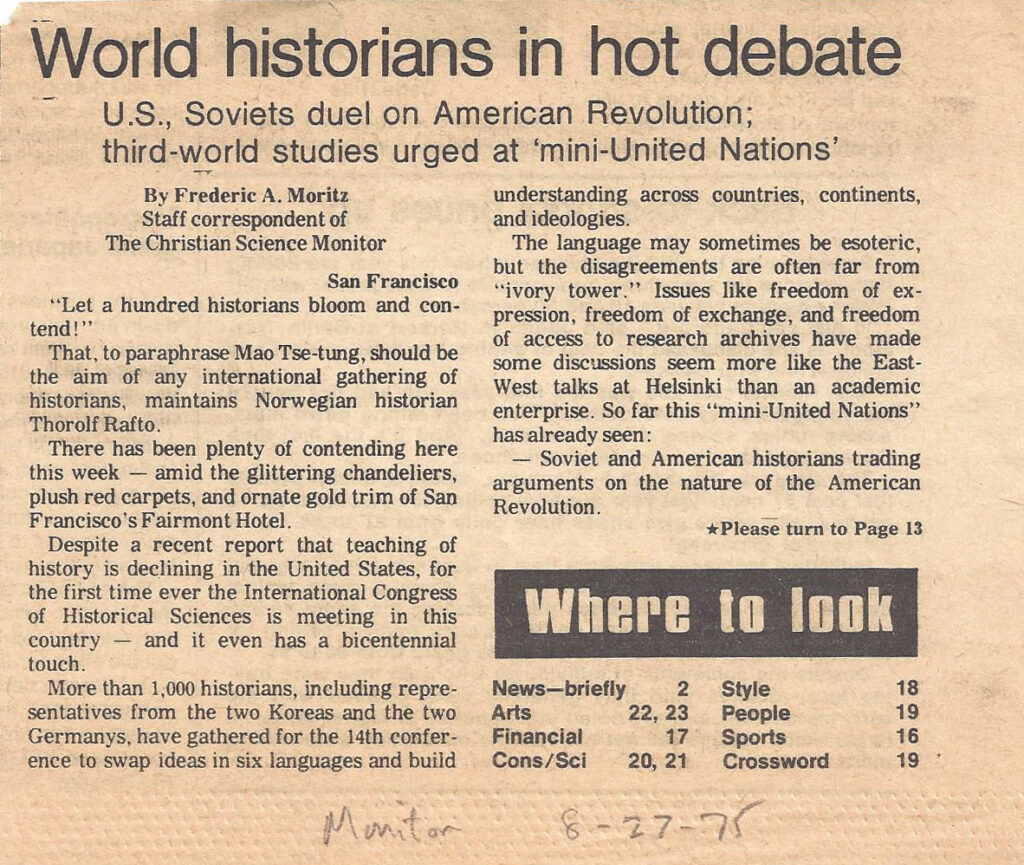
The San Francisco Congress received favourable reviews in the US press. It was pointed out that it was the first international initiative of this kind in the United States, gathering over a thousand historians, mainly American, but also British, Soviet, German, Korean, and African.

The nature of the American Revolution

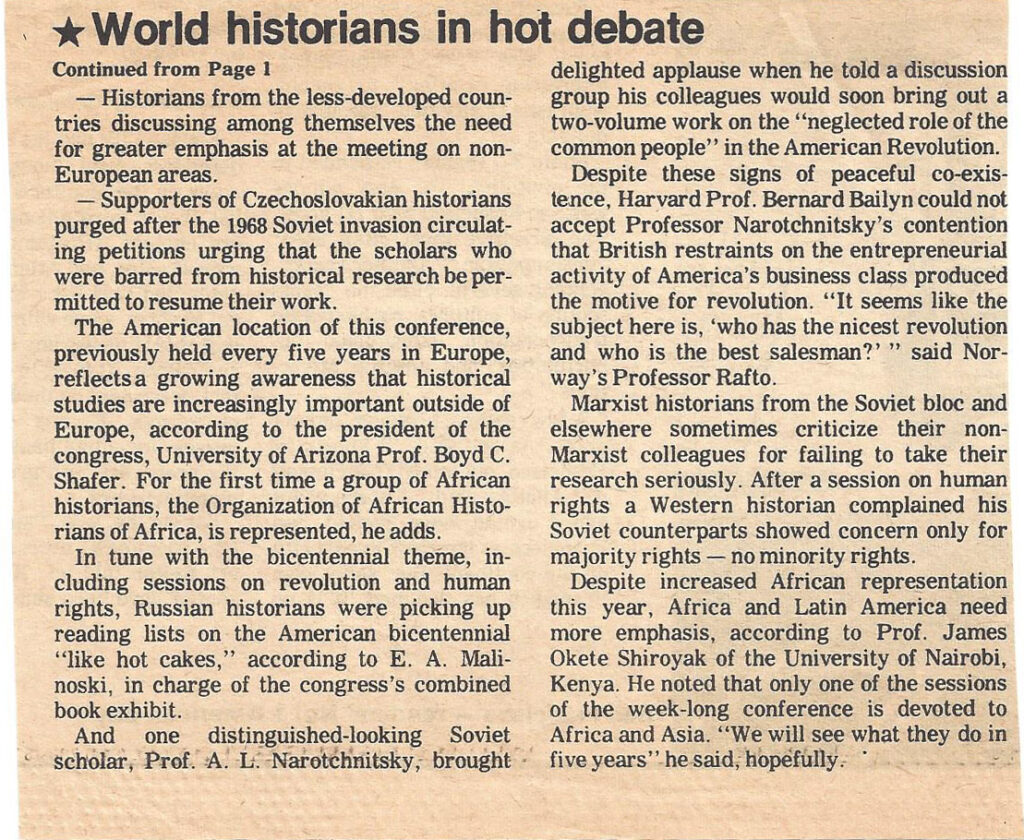
The atmosphere was relaxed. The debate on the nature of the American revolution that broke out between American and Soviet historians enlivened the sessions even more. This issue set the tone for the entire Congress and attracted the most attention. 1975 marked the bicentennial of the American Revolution. This gave rise to the discussion of human rights. The Congress moreover raised the issue of non-European historical research, as well as the development of the press and other media during World War II.

Boyd C. Shafer stressed that organising a congress of historians for the first time outside Europe gave it exceptional significance. In addition, for the first time ever, the Congress hosted historians from Africa, although James Okete Shiroyak from Kenya observed that only one session was dedicated to Africa and Asia.

Bibliography
  • Program of the Fourteenth International Congress of Historical Sciences, Hotel Fairmont, San Francisco 1975.
  • Moritz Frederic A., World Historians in Hot Debate: U.S., Soviets Duel on American Revolution; Third-World Studies Urged at ‘Mini-United Nations’, Monitor, 27.8.1975.

15th Congress – 10-17 August 1980

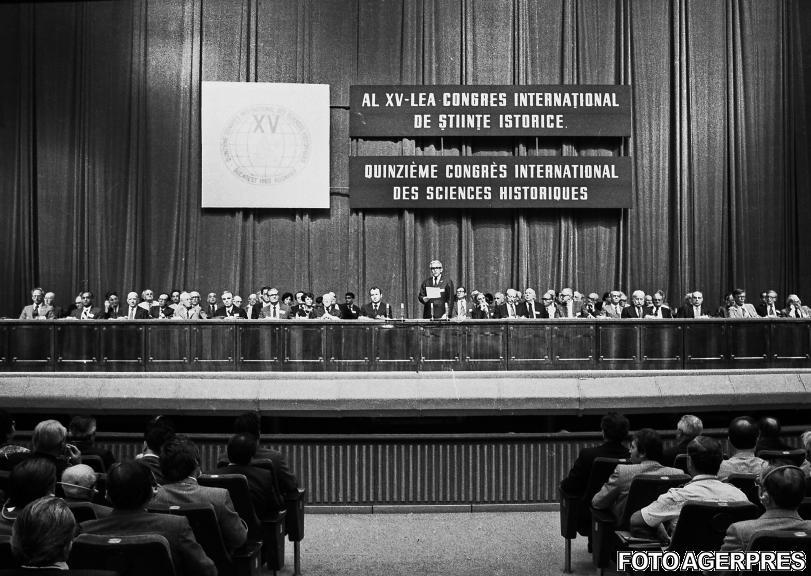
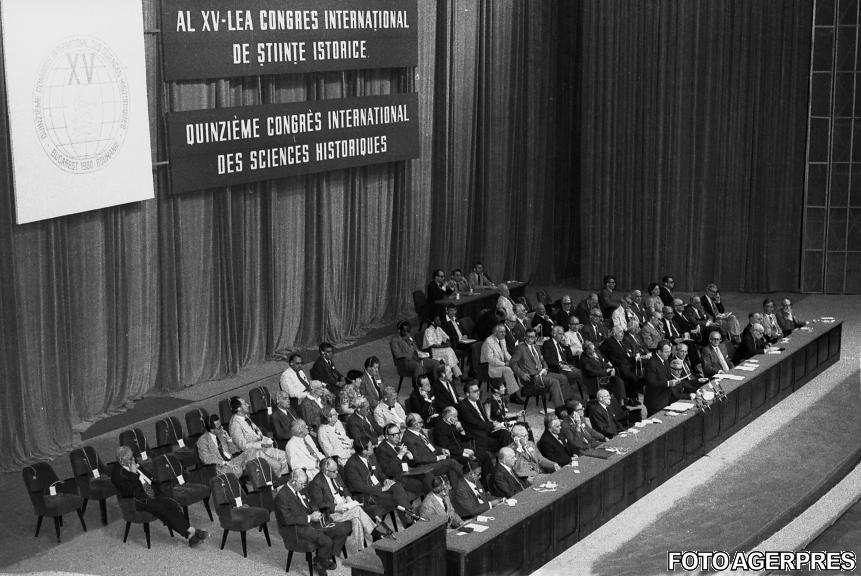
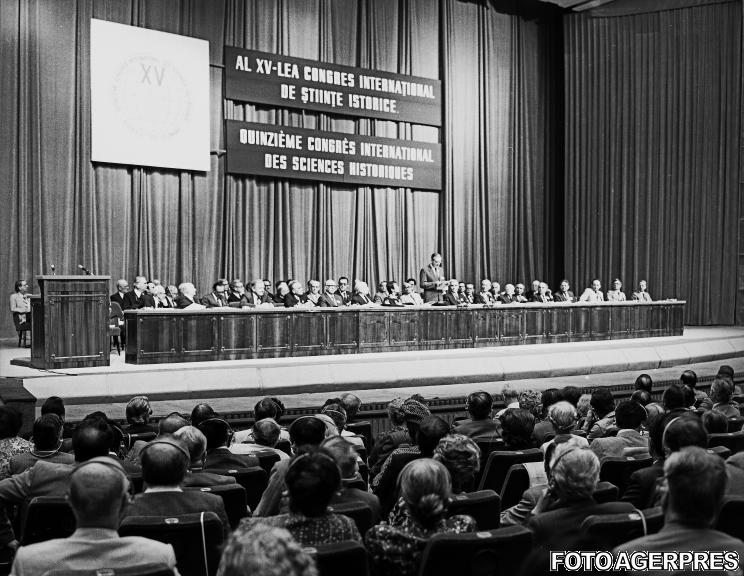
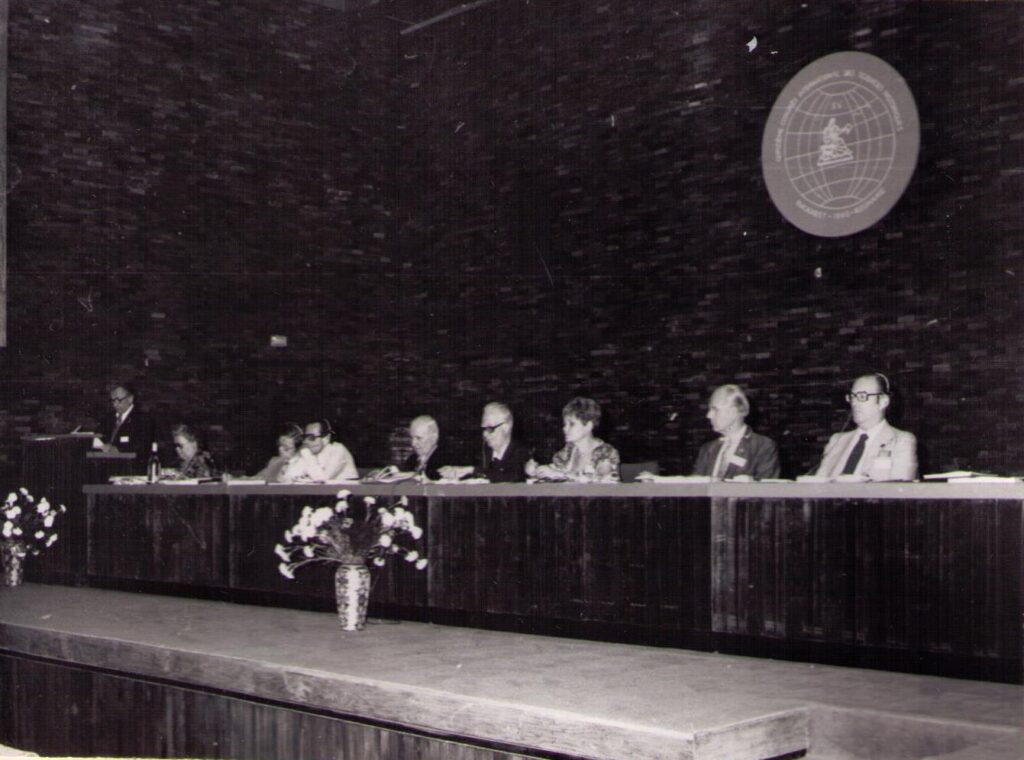
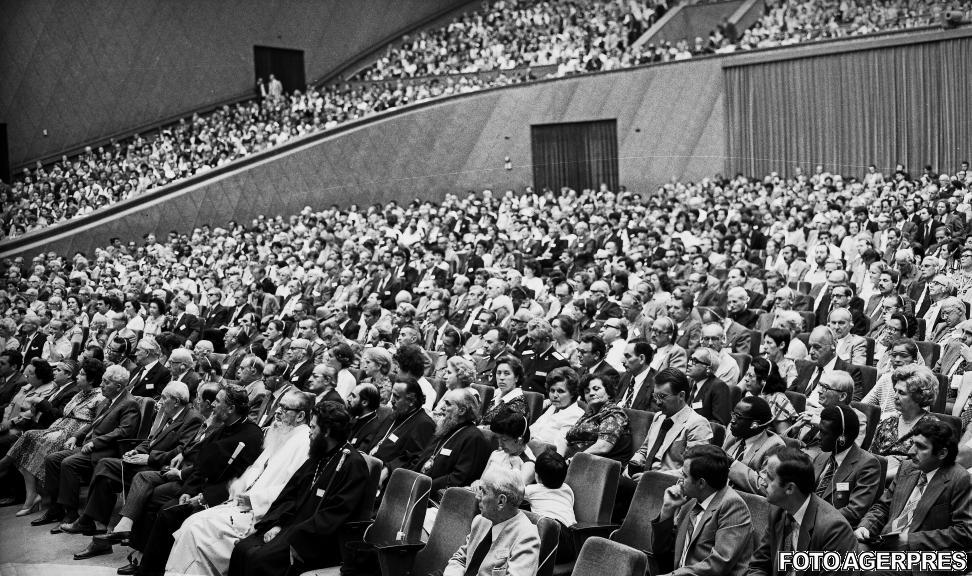
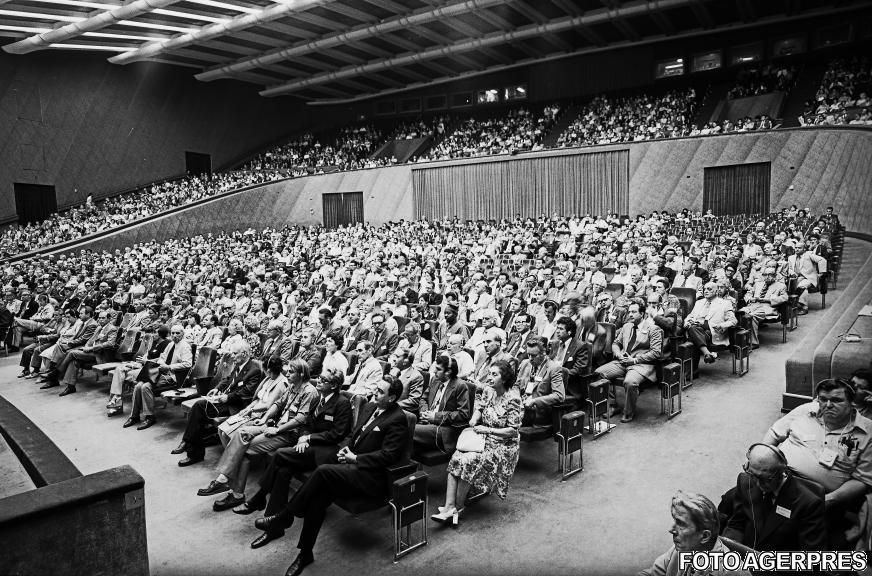
In the Romanian capital Bucharest, the 15th International Congress of Historical Sciences was held by an Organising Committee chaired by the Romanian Academy of Social and Political Sciences Mihnea Gheorghiu.

Participants

Over 2,400 historians from 67 countries took part in the Congress. The largest number of participants came from Romania (648), the United States (141), the USSR (116), Japan (108), Bulgaria (106) and France (100). Numerous were also delegations from German Democratic Republic (98), Spain (94), Federal Republic of Germany (90), Hungary (89) and Poland (75).
During the opening ceremony a letter sent by the Romanian President Nicolae Ceauşescu was read out. Vladimir Stepanek, a representative of UNESCO, also took the floor. The lectures at the opening ceremony were delivered by Karl Dietrich Erdmann, president of the International Committee of Historical Sciences, who spoke about the ecumenical community of historians, and Ştefan Pascu, chairman of the National Committee of Romanian Historians, who presented the genesis of Romance nations.

Sessions

The program of the Congress consisted of 144 sessions divided into three thematic groups: 4 so-called Major Themes, 4 methodological panels and 4 chronological sections. First of the Major Themes was devoted to Eastern Europe as an area of the encounter of civilizations, the second concerned the problem of peace and its forms over the centuries, the third federalist and pluralistic countries, and the fourth the place of women in society.

Methodological sessions concerned the issue of the language of historical narrative, the significance and role of historical education, the problems and methods of oral history, as well as the questions of demography, epidemics and ecology.

The chronological sections were divided into antiquity, the Middle Ages, modern times and contemporary history. Historians of ancient times and medievalists first of all discussed about East-West relations, civilizations and societies, as well as social and economic changes. With regard to the modern era, three problems were stressed: relations between continents and nations, relations between ideas and societies, and the economy. The section of current history focused on four subjects: international relations, relations between domestic politics and economy, societies, as well as work and management in industry in the 20th century.

During the Congress took place also numerous meetings of commissions and organisations affiliated with CISH (e.g. International Association of Byzantine Studies, International Economic History Association, International Association for Legal and Institutional History, African Historians Association, International Commission of History of Social Movements and Social Structures, International Commission for the History of Towns, International Commission for Historical Demography, International Commission for Diplomacy) and not affiliated associations (including the European Association for Contemporary History, the Working Group on the Application of Mathematical Methods in History). At the Congress was established the International Commission for Historiography.

Publications

During the closing ceremony of the Congress, Aleksander Gieysztor (newly elected chairman of the CISH) summed up the debate and thanked Romanian hosts for good organisation.
The Congress in Bucharest resulted in numerous publications – collections of papers and special volumes of journals published by some national committees. For example Romanian historians have published special issues of “Nouvelles études d’histoire” (1-2 / 1980), “Revue des Études Sud-Est Européennes” (2/1980), “Revista de Istorie” (7-8 / 1980), “Revue Roumaine d’histoire” (2-3 / 1980). Hungarian historians have prepared two volumes of the series “Études historiques”, and the Polish historians a volume “La Pologne au XVe Congres International des Sciences Historiques a Bucarest. Études sur l ‘histoire de la culture de l’Europe Centrale-Orientale”.

Bibliography
  • National Archives, National Historical Central Archives Service, Contemporary Archives Bureau, Fund of the Central Committee of the Romanian Communist Party – Department for Propaganda and Agitation, files 11/1980, 25/1980, 28/1980.
  • D. Berindei, The 15th International Congress of Historical Sciences and the Participation of Romanian Historians, Revista de Istorie 33 (1980), no 10, s. 1839-1855
  • XVe Congrès International des Sciences Historiques, Bucarest, 10-17 août 1980. Rapports, vol. 1-3, Bucharest 1980.
  • XVe Congrès International des Sciences Historiques, Bucarest, 10-17 août 1980. Actes, Bucharest 1982.
  • F. Constantiniu, De la Răutu și Roller la Mușat și Ardeleanu, Bucharest 2007.
  • I. Filipescu, Între propagandă și interes academic: Al XV-lea Congres internațional de științe istorice (București, 10-17 august 1980), Arhivele Totalitarismului XXIV, 90-91, 1-2/2016, 182-191
  • D. Hurezeanu, The 15th International Congress of Historical Sciences in Bucharest (August 10-17, 1980), Studii și articole de istorie no 41-42 (1980), 36-50
  • Nouvelles études d’histoire, vol. 1-2, ed. Ș. Pascu,Ș. Ștefănescu, D. Berindei, Bucharest 1980.
  • E. Siupiur, Publications périodiques parues à l’occasion du XVe Congrès International des Sciences Historiques, Revue des Études Sud-Est Européennes 19 (1981), no 1, 170-172.
  • The 15th International Congress of Historical Sciences (Bucharest, 1980). Documents, Information, Testimonies. (Documents, informations, témoignages), Bucharest 1980.
  • F. Velimirovici, Istorie și istorici în România comunistă (1948-1989), Cluj-Napoca 2015.

16th Congress – 25 August-1 September 1985

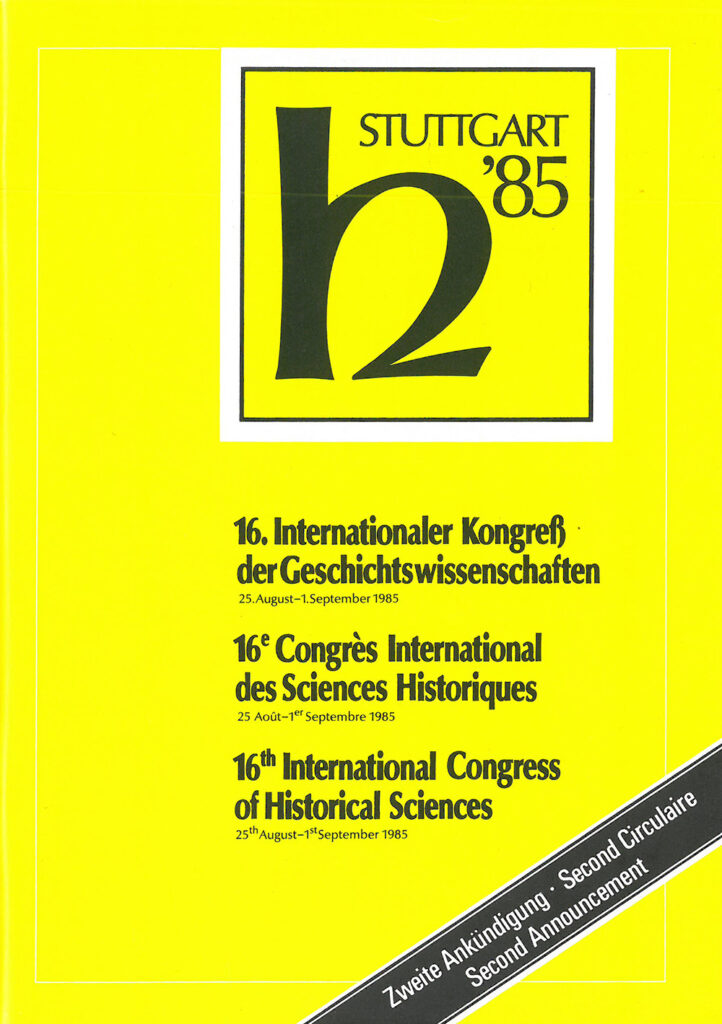
Stuttgart hosted the 16th International Congress of Historical Sciences between 25 August and 1 September 1985. The Organising Committee was headed by the Chairman of the German Association of Historians Christian Meier.

Participants

The Congress gathered close to 2,200 historians representing 59 countries. The biggest numbers came from the Federal Republic of Germany (around 600), the United States (117), Italy (111), Japan (111), France (92), Hungary (91), the United Kingdom (84), the USSR (68), Poland (63), German Democratic Republic (61), Spain (59), Romania (57), and Czechoslovakia (51). After a long break, the Congress hosted an official delegation of the People’s Republic of China (22 participants).

Addresses during the opening ceremony were delivered by: President of the Federal Republic of Germany Richard von Weizsäcker and Lord Mayor of Stuttgart Manfred Rommel. The keynote speaker was Aleksander Gieysztor, President of the International Committee of the Historical Sciences.

Sessions

The Congress agenda included 3 so-called major themes, 3 methodology panels, 4 chronological sections, and “round table” debates. The first major topic was dedicated to the Indian Ocean as a geographic and historical area and its impact on the countries of Asia and Africa. Another one was related to the Other and the related questions of otherness, identity and discrimination, while the third one highlighted resistance against fascism, Nazism, and Japanese militarism by 1945 in the context of opposing one’s own governments and collaborating with the oppressor.

The methodology sessions related to Max Weber’s views on the methodology of history, relations between archaeology and history and the significance of film as a historical source. The chronological sections were divided into antiquity, the Middle Ages, modernity, and contemporary times. In relation to the antiquity, the emphasis was placed on the cultural role of the city and the relations between the state and religion. Antiquity experts and medievalists discussed together the role of geographical barriers in history. In addition, the medieval section focused on the issue of popular and religious movements and the relationship between political regimes and authorities. Modernity specialists dealt with: religious reforms in 16th-century Europe, absolute monarchy in Europe and Asia, parliaments and political parties until 1914, the role of religion in Africa, relations of “small states” to cultural, political and economic transformations in 1750-1914 and relations of elite culture to mass culture from the 18th century onwards (together with specialists in recent history). The participants in the section on modernity also discussed six other thematic areas: the new dimension of diplomacy since 1914, employment and unemployment after Keynes, the effects of the development of the automotive industry, relations between citizens and public administration, social change in developing countries and relations between political parties, public opinion and national security. The “Round Tables” were devoted, among others, to the problems of historical sources (publication of 19th and 20th century sources and historical magazines), the image of Asia in modern European thought, and the role of the family in history. In addition, a meeting was held dedicated to the question of historians and the problem of peacekeeping. It ended with an appeal to nations and governments for peace and the cessation of nuclear tests.

During the Congress, numerous meetings of commissions affiliated with the International Committee on Historical Sciences took place. These meetings were held e.g. by the International Association of Byzantine Studies, Commission Internationle d’Histoire Maritime, International Economic History Association, International Federation of Societies and Institutes for the Study of the Renaissance, International Commission for the History of Towns, International Commission for the Slavic Studies, International Association of History of Law and Institutions, Commission internationale de diplomatique, and International Society for History Didactics.

New board members of the International Committee of Historical Sciences were elected during the Congress. The outgoing President Aleksander Gieysztor was replaced by Ernesto de la Torre Villar from Mexico.

The Stuttgart Congress bore fruit with numerous publications – collections of papers and special volumes of journals issued by some national committees.

Bibliography
  • Zespół Bundesarchiv, Verband der Historiker und Historikerinnen Deutschlands e.V., B 510
  • Max Weber, der Historiker, red. J. Kocka, „Kritische Studien zur Geschichtswissenschaft”, 73, red. H. Berding, J. Kocka, H.-U. Wehler, Göttingen 1986.
  • XVIe Congrès International des Sciences Historiques, Stuttgart du 25 août au 1er septembre 1985. Rapports, vol. 1-2, Stuttgart 1985.
  • XVIe Congrès International des Sciences Historiques, Stuttgart du 25 août au 1er septembre 1985. Actes, Stuttgart 1986.
  • P. Pleskot, Intelektualni sąsiedzi. Kontakty historyków polskich ze środowiskiem „Annales” 1945–1989, Warszawa 2010.
  • J. Topolski, XVI Międzynarodowy Kongres Nauk Historycznych w Stuttgarcie 25 sierpnia-1 września 1985, „Kwartalnik Historyczny” 93, 1986, s. 925-929.
  • 16. Internationaler Kongreß der Geschichtswissenschaften. Ansprache bei der Eröffnungssitzung in der Liederhalle in Stuttgart (25. August 1985), [w:] R. v. Weizsäcker, Reden und Interviews, cz. 2, Bonn, 1986, s. 41-46.

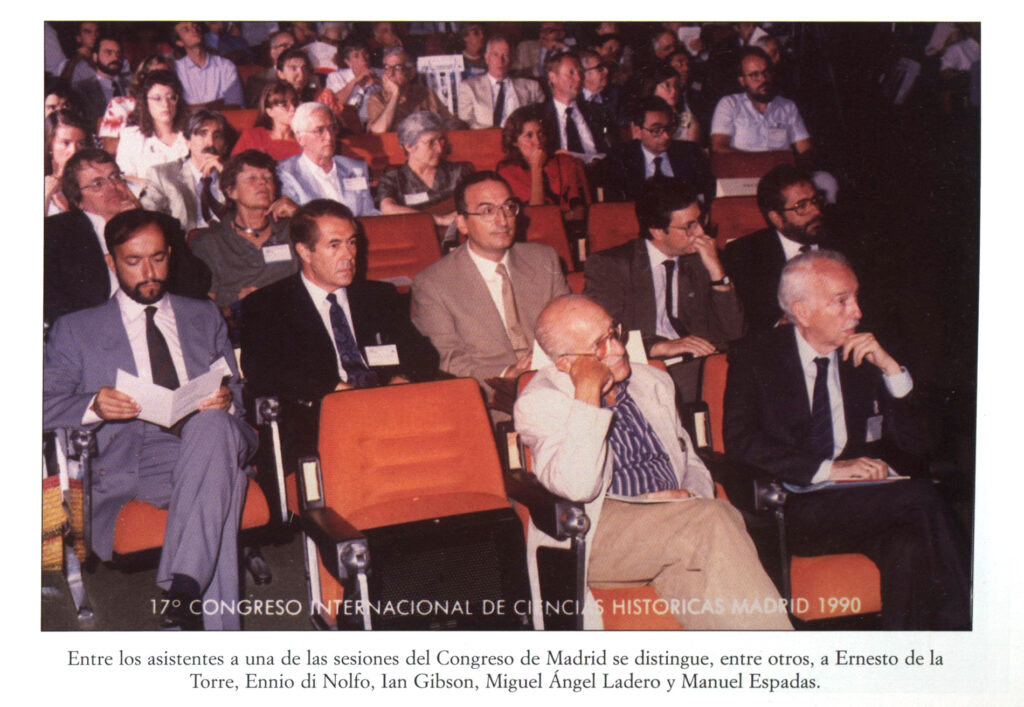
17th Congress – 26 August-2 September 1990

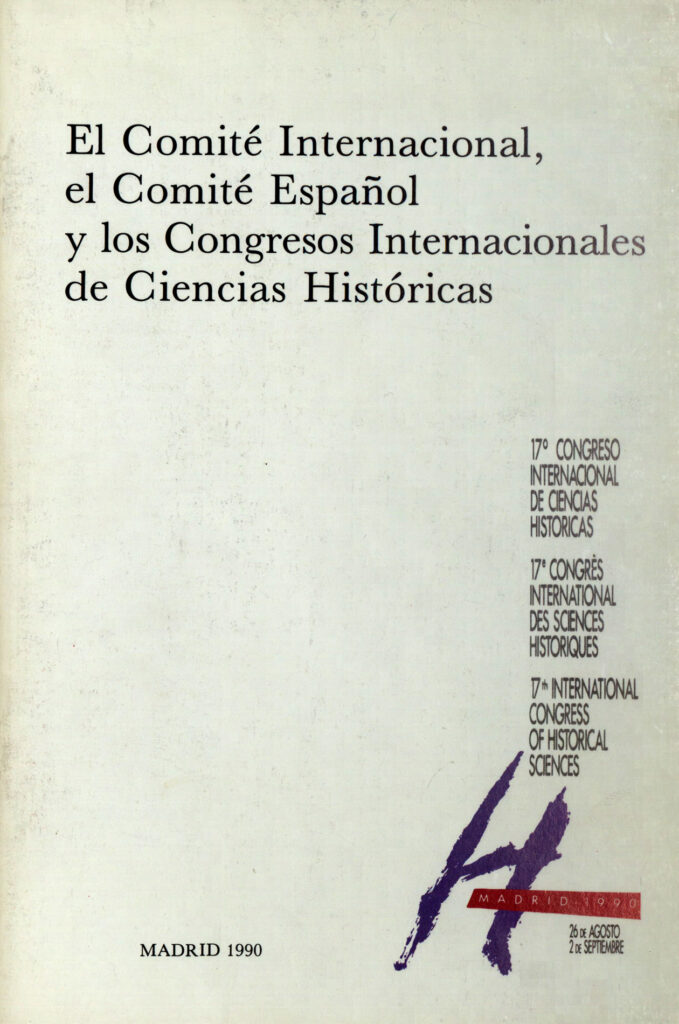
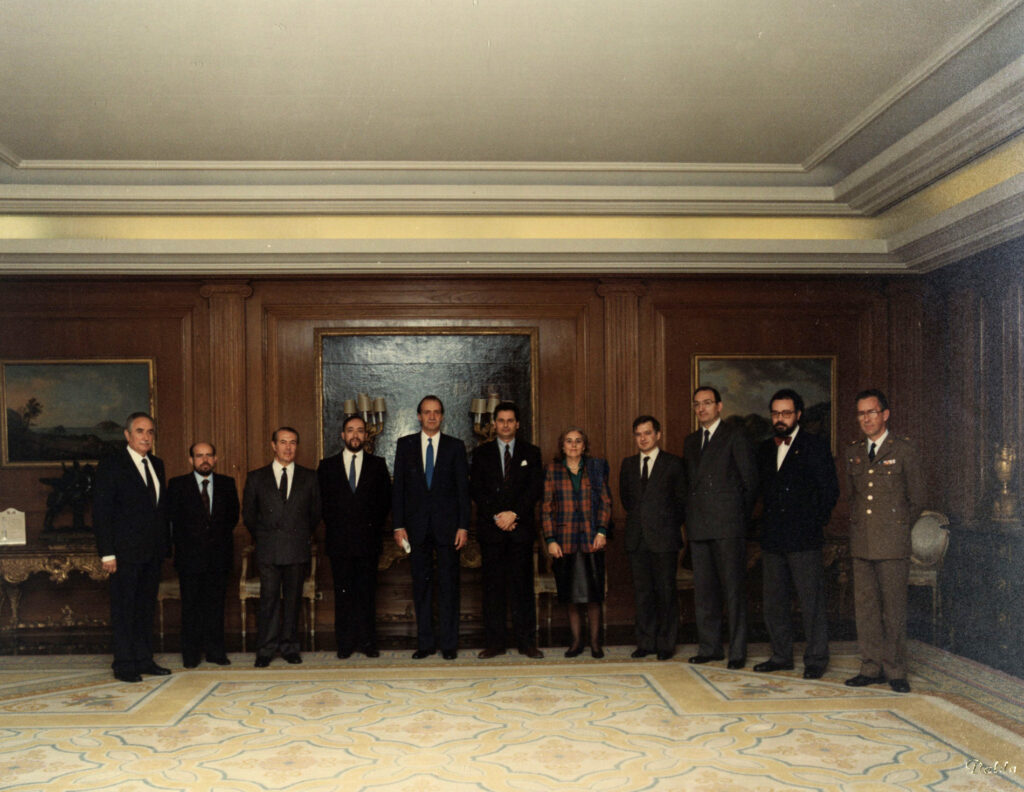
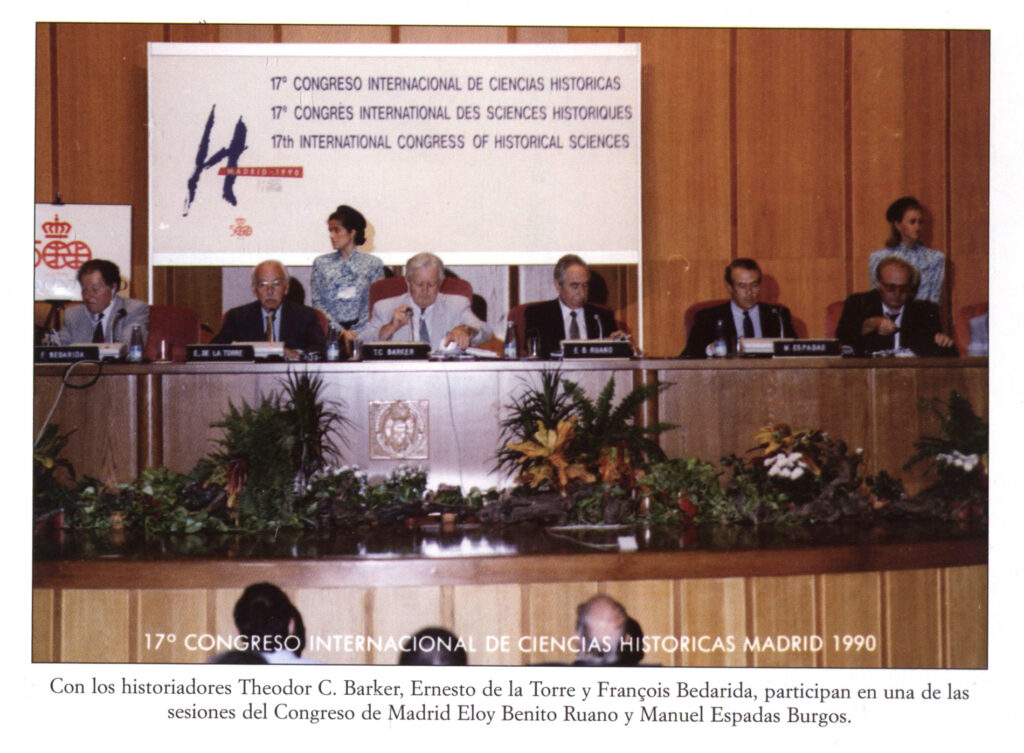
The 17th International Congress of Historical Sciences took place between 26 August and 2 September 1990 in Madrid. The Spanish Committee of Historical Sciences began to plan the event still before the 16th Congress in Stuttgart in 1985, during which the Spanish capital was selected as the venue of the next Congress. The Committee was set up by a group of historians led by Eloya Benito Ruano, with Manuel Espadas Burgos as secretary, José Ramón de Urquijo Goitia as “assistant secretary”, and Miguel Angel Ladero Quesada as treasurer.
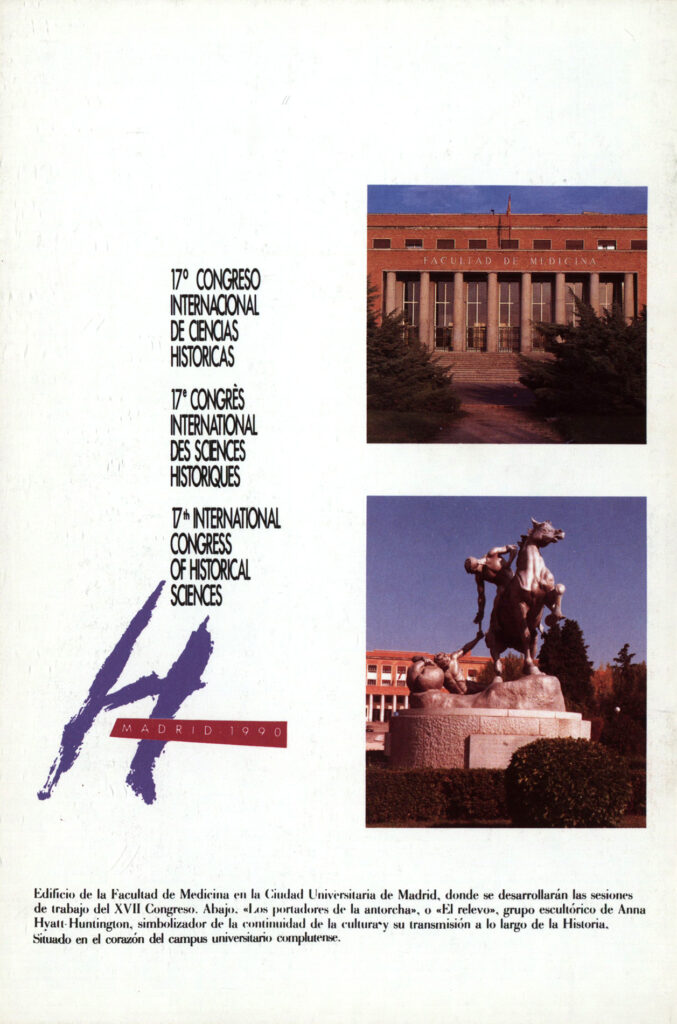
The official program of the Congress was adopted during the General Assembly of the International Committee of Historical Sciences in Athens in September 1987. In this month King Juan Carlos I of Spain assumed honorary presidency of the Congress. In the following months support was granted by the Spanish government and by Complutense University of Madrid, whose large buildings of the Medical Faculty were the venues of the 312 Congress sessions.
Activities

Final arrangements of the Congress calendar took place during the meeting of the Board of the ICHS , held in Madrid in May 1988. Plans were then made to hold activities parallel to the sessions, such as exhibitions and book fairs, days of historical cinema and the preparation and edition of a 32-page volume written by E. Benito Ruano titled El Comité International, el Comité Espanol y los congresos Internacionales de Ciencias Históricas. Visiting tours were likewise planned for the Congress participants, e.g. to Toledo and Aranjuez.

Participants

1,832 historians registered for the Congress. Some countries (Italy, Japan, United States) were represented by more than 100 participants. The opening plenary lecture titled The Spanish Environment of Christopher Columbus was delivered by Miguel Ángel Ladero. The Congress agenda included major themes, chronological sections, round tables, and meetings of affiliated committees and associations.

Proceedings

Preliminary versions of most of the articles and communiques were distributed during the Congress. The Congress proceedings were ultimately published in early 1992 in four volumes (each with a print-run of 2,500 copies); they were received by all the registered participants. This was the last time when the Congress documents were paper-based.
The Madrid Congress was lavishly praised for its premium logistics, care for the participants and their companions, internal organisation, and – last but not least – for the number and diversity of topics and a general interest in the subject matter addressed during the Congress.

Bibliography
  • Eloy Benito Ruano, El Comité International, el Comité Espanol y los Congresos Internacionales de Ciencias Históricas, Madrid 1990.
  • 17o Congreso Inernational de Ciencias Históricas 26 de Agosto – 2 de Septiembre 1990. Segunda Circular, Madrid 1990.
  • 17o Congreso Inernational de Ciencias Históricas 26 de Agosto – 2 de Septiembre 1990. Programa, Madrid 1990.

18th Congress – 27 August-3 September 1995

The 18th International Congress of Historical Sciences in Montreal was connected with the 74th Conference of the Canadian Historical Association. The Organising Committee was composed of representatives of local universities: McGill University, Université de Montréal, Concordia University, and Université du Québec. Co-organiser was the Canadian Historical Association (CHA).

Participants

In the Congress participated 2225 historians from 75 countries. During the opening session was considered the role of historian in contemporary world. Among the most prominent guests of the Congress were: French President François Mitterrand, Polish historian and chairman of the Democratic Union, Bronisław Geremek, British economist Sir Alec Cairncross and General Director of the UNESCO, Federico Mayor.

Sessions

Most of the sessions took place at the Palais des Congres. The closing ceremony was held in the main hall of the Université du Québec. The Congress program consisted of over 80 sessions. The most important role in the structure of the Congress played three so-called Major Themes: “Nations, Peoples, States”, “Relations between Men and Women and the Great Historical Changes”, “Diasporas: Origins, Forms, Significance”). In addition, 16 specialized sessions and 36 round tables were held, as well as panels organised by commissions and associations affiliated to ICHS. They concerned all areas of historical studies.

During the Congress their publications presented the publishers of historical books . There was also an exhibition of accomplishments of Canadian historiography.

At the 74th KSH Conference, which took place during the Congress, were held more than 80 sessions. They were devoted to such topics as: continental economic integration, world history and environmental history, sexuality and citizenship, crime, gender, rural history, shaping and “controlling” national memory , World War II and its heritage, social space in an eighteenth-century European city, Latin American social history.

Bibliography
  • K.D. Erdmann, Towards a Global Community of Historians. The International Historical Congresses and the International Committee of Historical Sciences. 1898-2000, ed. by J. Kocka, New York – Oxford 2005.

19th Congress – 6-13 August 2000

The 19th International Congress of Historical Sciences was held in the capital of Norway thanks to the initiative of the Norwegian Historical Association (HIFO), which, in so doing, met the expectations of the Norwegian scientific community. The Organising Committee was chaired by Even Lange representing HIFO; his deputy was Helge Pharo from the University of Oslo. The Committee was also composed of Per G. Norseng and May Brith Ohman Nielsen as representatives of HIFO, Solvi Sogner on behalf of the University of Oslo, Steinar Imsen from the Norwegian Institute of Technology and Helge W. Nordvik, representative of the Norwegian School of Economics and Business in Bergen. Responsible for Congress administration were Astri Andresen (Bergen University) and Randi Ronning Balsvik (Tromso University).

Participants

Oslo hosted over 1,800 historians from 73 countries. Norway was represented by the largest group of scholars (close to 340 historians). Other numerous groups included scholars from the USA (210), Sweden (146), the United Kingdom (122), and Italy (120).

Sessions

The Congress was officially launched by the Speaker of Norwegian Parliament Kirsti Kolle Grondahl. The opening addresses were delivered by Kaare R. Norum, President of Oslo University, and Per Ditlev-Simonsen, Mayor of Oslo. The opening panel, chaired by Ivan Berend, was dedicated to the historians’ angle on the twentieth century.
The Congress agenda included 3 so-called Major Themes , 20 specialist topics and 25 debates. In addition, there were separate sessions organised by 36 commissions affiliated with CISH, including 55 poster sessions and a series of historical workshops. One of the main questions discussed were methodological issues related to the development of global history. There was also a discussion on the problem of European, American and Asian historical centrism as well as regionalism and minorities.

Digitalization

One of the conclusions of the Congress was the organisers’ conviction that the traditional form of publishing abstracts or summaries of papers was too expensive and time-consuming, which is why they should appear only on the Internet.

The Oslo Congress had a very high organisational and substantive level. It contributed to the popularization of knowledge about Norwegian historical research, as well as to the consolidation of the international historical environment through the establishment of numerous new contacts. The organisers adopted solutions that made it easier for historians from non-European countries to participate in the Congress.

The Congress aroused great interest in Norwegian and foreign media. Radio and television broadcasts were regularly conducted, and as many as 55 articles were published in the Norwegian press.

Source

Programm

20th Congress – 3-9 July 2005

First Congress in the Southern Hemisphere

The 20th International Congress of Historical Sciences took place in Sydney on the campus of the New South Wales University. For the first time it was held in the Southern Hemisphere and in the Great Pacific region. The three major themes of the Congress were addressing questions of importance to historians across the world: environment (Humankind and Nature), war and peace and the relationship between myth and history.

Its organisation was entrusted to the Australian Historical Society and the University of New South Wales in Sydney. The Organising Committee was chaired by Martyn Lyons.

Participants

The Congress was attended by historians from many countries, including China, New Zealand, Senegal, Great Britain, the United States, Poland, Syria, France, and Germany, a total of about 1,400 people. The participants included eminent scholars such as Hayden White from the USA, Georg Iggers and Jürgen Kocka from Germany, José Luis Peset from Spain, Dame Anne Salmond from New Zealand, and Ibrahima Thioub from Senegal.

Sessions

The topics discussed during the session were very diverse. One of the main issues was the globalization of history and global history, as well as the issue of war, peace and the world order in history. In addition, environmental history and human rights were discussed. Ample attention was devoted to the debate on the status of history as a scientific discipline.
Generally, the Congress was favorably assessed. The discussions were matter-of-fact and touched upon the vital problems of contemporary historical science. It was emphasized that the interest of historians in the past must go hand in hand with their interest in the present.

Opening Speech

Programm

Bibliography
  • Australia’s History, éds. Martyn Lyons, Penny Russell, Sydney 2005.
  • History in Global Perspective : Proceedings of the 20e International Congress of Historical Sciences,éd. Martyn Lyons, Sydney 2006, CD-ROM

21st Congress – 22-29 August 2010

The 21st International Congress of Historical Sciences took place in Amsterdam on 22-28 August 2010. The preparations were led by a special consortium headed by Hans Blom. The pillars of this consortium were four institutions: The Royal Dutch Historical Society, the University of Amsterdam, the Dutch National Library, and the International Institute of Social History.

Major Themes

Three major themes on which the historians worked, were this year there, the fall of the Empires, the City as Culture and the connections between Religion and Power.

Solidarity Fund

The Organising Committee took a new initiative in the history of congresses, which was the creation of the Solidarity Fund, chaired by Pim den Boer, meant to enable historians from less developed countries to participate in the Congress by providing financial support. Ultimately, 90 researchers were the beneficiaries of the Congress.

Participants

About 1,300 participants from 84 countries attended the Amsterdam Congress. The largest group were Dutch historians (237 people), followed by Americans (114), Brits (81) and Germans (75). Participants included luminaries of historical sciences, e.g. José Louis Peset from Spain, Jean Claude Robert from France, Lex Heerma van Voss from the Netherlands, Bozhong Li from China, and Ibrahima Thioub from Senegal.

Sessions

The Congress was scientifically very productive. A total of 175 sessions were held. The opening debate of the Congress was devoted to the history of water and water management. The three so-called major themes concerned more conventional issues: the collapse of empires, the city as culture, and finally religion vs. power. Among other panels, a lively discussion was triggered by a debate on the freedom of research and historical memory. The problem of globalization was also present in the discussions.

The Congress was widely echoed in the Dutch press. An interesting review of it, by Roger Chartier, came out in Le Monde.

Source

Programm

Final Report

22nd Congress – 23-29 August 2015

The 22nd International Congress was organised by the Association of Chinese Historians which officially became a National Committee of the International Committee of Historical Sciences in 1982, and by the Department of History and Culture at Shandong University.

Participants

The Congress gathered 2077 participants (2765 people registered on the website), including 785 foreign scholars (from 76 countries and regions in Europe, America, Asia, Africa and Oceania). The opening ceremony was attended by Vice Premier Liu Yandong who read the Congratulatory Message from President Xi Jinping. CISH President Marjatta Hietala, delivered the opening speech, in which she reviewed the process and channels of knowledge transmission and transnational cultural communication between China and the world and pointed out the role of the CISH in this process. She also responded to the challenges facing contemporary historians, such as competition, media, and the Internet.

The theme of the Opening Lectures was Nature and Human History. They were given by three distinguished scholars from Europe, Africa and Asia: Andrea Giardina (Italy), Mamadou Fall (Senegal) and Xia Mingfang (China) invited by the organisers.

Sessions

The Congress consisted of different types of sessions: 4 Major Themes, 27 Specialised Themes, 18 Joint Sessions, and 19 Round Tables. In addition, 19 commissions affiliated by ICHS organised their own special sessions. Also 3 Evening Sessions and a Graduate-Student Poster Session were organzed. First Major Theme, China from Global Perspectives, was organised by Wang Jianlang and María Dolores Elizalde. Fourteen scientists took part in the session, expressing their views on the relationship and interaction between China and the rest of the world, the role of China, and its impact on the history of globalization since the 15th century. Second Major Theme talked about historicizing emotions. For the first time in the history of the Congress, emotional history research was designated as a major theme. The topic aroused great interest. The organisers of the panel were Ute Frevert and Andrew Lynch. Third Major Theme Revolutions in World History: Comparisons and Connections was convened and hosted by Alan Forrest, Mitani Hiroshi and Pierre Serna. Four topics were covered in four sessions: Revolutions in the Atlantic World, Revolutions in Twentieth Century Europe, Revolutions in Modern Africa and the Middle East, Revolutions in Modern East Asia. The scholars discussed revolutions in different regions. Forth Major Theme, Digital Turn in History, was organised by Tom Dublin. The first session in the morning was entitled Digital History: Challenges and Possibilities, the second, afternoon session, focused on New Tools, New Narratives, New Histories. The evening session was designed around the topic Promoting Digital History Internationally.

Subjects of the speeches given at the Congress was diverse, though for everyone global and international perspective was common. That’s what the CISH has always encouraged, to avoid narrative too focused on national states, and instead apply global and international one. Some new subjects were represented in the program but in addition also, traditional topics or approaches (national history, regional history, political history, gender history, labor history, public history) were addressed from new perspectives of global history. Reviewing how these sessions were organised or what the papers talked about, we could make the conclusion that despite “global history” was not one of the major themes of the Jinan Congress, never have previous Congresses been characterized so much by “global approach”.

Source

Opening Speech
Serge Gruzinski, When the Eagle visits the Dragon
Report
Echoes of the Congress

23rd Congress – 21-27 August 2022

Postponed twice due to the outbreak of the COVID-19 pandemic and the unsatisfactory progress in fighting it in most countries, the 23rd International Congress of Historical Sciences (ICHS) was held in Poznań (Poland) on 21-27 August 2022.

Sessions

Different panels were held during the Congress in Poznań: Major Themes, Joint Sessions, about 20 Round Tables, as well as several dozen specialist Panels and evening Sessions devoted to various issues from antiquity to the present day. A Poster Session was dedicated to post-graduate and PhD students, whose best works were honored with CISH-Shandong University Young Historian Award. Over 100 sessions were held during the Congress, over 550 papers were delivered from all epochs and all fields of historiography.
A new initiative, the Research Forum, was promoted by the CISH Board to allow research institutions to present their ongoing or planned projects to an audience of established scholars and beginner researchers. This initiative fully coincides with the CISH mission, as one of its objectives is to stimulate dialogue between young scholars and various research institutions.

Participants

The Congress in Poznań finally gathered around 1,000 participants from all continents. Roughly 60% of them participated in person, the rest took the opportunity to participate online (apart from Poland, they came mainly from China, Italy and the United States).

Prize

During the Congress in Poznań, the CISH International Prize for History was awarded for the third time. It honored the distinguished historian Sanjay Subrahmanyam.

Opening Ceremony

Closing Ceremony

Program

Opening Speeches

Archived website here.

In 2021, the General Assembly chose Jerusalem for the venue of the International Congress of Historical Sciences to be hosted in 2026. Because of the ongoing war in the Near East, in 2024 it was decided to postpone the congress to 2028 and to host a Centennial Congress in Leipzig in 2026 instead.

However, the circumstances in the Near East since then even have worsened. The Israeli National Committee thus informed about its desire to step back from organising the Congress in 2028 as the circumstances in the Near East simply do not allow its organisation in the near future.

The CISH is deeply committed to the idea that international scholarship and dialogue can foster mutual understanding as well as reconciliation. In this spirit, we hope that someday it will be possible to host a CISH Congress in Israel, and we sincerely thank Professor Shmuel Feiner and all our Israeli colleagues for their efforts.

Click here to see the Call.

The published texts are the result of joint work of the group of colleagues from different countries. Some of them have strictly original character, i.e. they were entirely prepared by one author. In this case his/her name appears under the note. Other texts were developed by Karolina Filipowska and Krzysztof A. Makowski, usually on the basis of the material sent by colleagues from the countries where congresses were held.

Autors

Stefan Eklöf Amirell, Nora Birkeland, W. (Pim) den Boer, Susan Carr, Nadezhda Chesnokova, Michel Duquet, Bogusław Dybaś, Margot Finn, Miguel Ángel Ladero Quesada, Liu Jiafeng, Martyn Lyons, Agata Łysakowska-Trzoss, Anna Magdzińska, Kristina Matron, Asunción Miralles, Paulina Misiewicz, Maciej Moszyński, Karen M. Offen, Ioan-Aurel Pop, Małgorzata Praczyk, Jean-Claude Robert, Sacha Zala.

Next World Congress of Historical Sciences – 2029/2030

By the deadline of 31 May 2026, the CISH Board had received three candidatures for hosting the next World Congress of Historical Sciences in 2029 or 2030.

  • According to the Constitution adopted on 27 August 2026, this set of candidatures was confirmed by the General Assembly, which charged the Presidium with conducting negotiations with the respective National Committees.
  • The final decision will be taken by the CISH Board.
  • The candidates are São Paulo (Brazil), Lyon (France), and Kolhapur (India).

In 2021, the General Assembly chose Jerusalem for the venue of the International Congress of Historical Sciences to be hosted in 2026. Because of the ongoing war in the Near East, in 2024 it was decided to postpone the congress to 2028 and to host a Centennial Congress in Leipzig in 2026 instead.

However, the circumstances in the Near East since then even have worsened. The Israeli National Committee thus informed about its desire to step back from organising the Congress in 2028 as the circumstances in the Near East simply do not allow its organisation in the near future (Letter and Response).

The CISH is deeply committed to the idea that international scholarship and dialogue can foster mutual understanding as well as reconciliation. In this spirit, we hope that someday it will be possible to host a CISH Congress in Israel, and we sincerely thank Professor Shmuel Feiner and all our Israeli colleagues for their efforts.

CISH Centennial Conference

The Past, the Present, and the Future of History

From 26 to 30 August 2026 in Leipzig, Germany, the CISH celebrated its hundred years anniversary. Scholars from all around the world gathered for four days of keynotes, panels, and knowledge exchange.

Documentation

The volume edited by Sacha Zala and Lila Zeller in the series Quaderni di Dodis from the Dodis research centre (Diplomatic Documents of Switzerland) presents 50 documents and provides access to a total of approximately 340 documents through the Dodis database, tracing these developments from 1926 to 2026. It brings together sources from several archives showing how cooperation among historians was organised, transformed and sustained across changing political and intellectual contexts.

The book can be downloaded as a PDF or e-book, or ordered as a print-on-demand copy on the Dodis website.